What Are the 2026 Top Car Engine Types for Global Buyers?
Choosing the right car engine in 2026 will depend on more than fuel prices or showroom trends. Buyers will compare range, charging access, repair skills, emissions rules, and long-term ownership costs.
The International Energy Agency reported that global electric car sales exceeded 17 million in 2024, representing more than one-fifth of new-car sales. Its Global EV Outlook 2025 expects sales to rise further, although adoption remains uneven across regions. China, Europe, and North America follow different paths. In many emerging markets, efficient gasoline engines and hybrids still offer practical advantages. A fuel station may be nearby, while a reliable fast charger may not be.
Deloitte’s 2025 Global Automotive Consumer Study also highlights continuing consumer concerns about vehicle prices, charging convenience, and battery confidence. These concerns keep hybrid, plug-in hybrid, diesel, and modern gasoline powertrains relevant. Battery-electric vehicles remain important, but they should not be treated as the only sensible choice. That would be too simple.
This guide examines the leading car engine types for global buyers in 2026. It compares driving range, maintenance demands, operating costs, performance, and infrastructure requirements. Gasoline and diesel engines still suit long-distance users and commercial fleets. Hybrid systems can reduce fuel consumption without requiring daily charging. Plug-in hybrids may bridge familiar refueling with electric driving. Battery-electric vehicles offer quiet operation and fewer moving parts. Hydrogen fuel-cell vehicles remain promising, but limited fueling networks restrict their current reach.
The evidence is not perfectly uniform. Regional policy, electricity quality, climate, and driving habits can change the outcome. A coastal commuter and a rural freight operator should not receive the same recommendation.
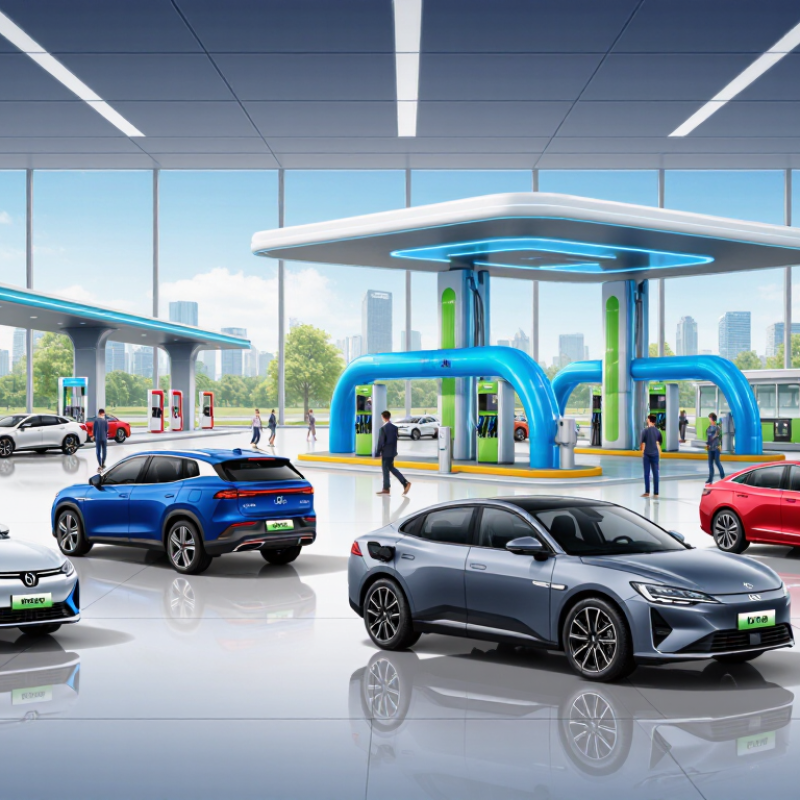
Powertrain Taxonomy: Comparing ICE, HEV, PHEV, BEV, and Hydrogen
For global buyers in 2026, no single engine type fits every road, climate, or budget. Powertrain taxonomy separates familiar labels from real driving needs. Internal combustion engines, or ICE, remain practical for long-distance travel and regions with limited charging access. Petrol and diesel refueling is quick, while repair skills are widely available. However, fuel costs, emissions, and maintenance demands remain important concerns. In cold, dusty, or poorly serviced areas, engine durability can matter more than laboratory efficiency.
Hybrid electric vehicles, or HEVs, combine an engine with a battery and electric motor. They recharge through braking and engine operation, so drivers do not need a plug. This setup can reduce fuel use in crowded city traffic. Plug-in hybrids, or PHEVs, offer a larger battery and external charging. A 40-kilometer daily commute may use little fuel when charging is consistent. Without regular charging, their extra battery weight can reduce efficiency. That detail is often overlooked.
Battery electric vehicles, or BEVs, use electric motors without onboard combustion. They provide quiet acceleration and fewer routine powertrain service needs. Actual range changes with temperature, speed, cargo, and heating use. Hydrogen vehicles refuel quickly and produce water at the vehicle, but fuel stations remain limited in many markets. In my own early comparisons, I focused too heavily on rated range. That was too simple. Buyers should compare local electricity, fuel, charging, service, and weather conditions before choosing.
IEA Outlook: EVs Near 40% of Global Sales by 2030—What 2026 Buyers Face
Global car buyers in 2026 will face four main powertrain choices: gasoline, diesel, hybrids, and battery-electric vehicles. Plug-in hybrids will remain useful where charging access is uneven. However, the market is shifting quickly. The International Energy Agency’s Global EV Outlook 2025 expects electric cars to approach 40% of global new-car sales by 2030 under current policies. That projection includes battery-electric and plug-in hybrid vehicles.
Regional conditions will matter more than headlines. The IEA expects electric sales shares to become much higher in China and Europe, while adoption may grow more slowly in markets with limited charging networks. The International Council on Clean Transportation also reports that vehicle efficiency and emissions rules are tightening across major economies. Still, forecasts can age badly. Electricity prices, mineral supply, tariffs, and charger reliability may change buyer decisions. A quiet electric car is attractive, but a 500-kilometer trip needs planning when public chargers are scarce.
Tips: Match the engine to your daily route. Choose a battery-electric vehicle if home charging is reliable and most journeys are predictable. Consider a hybrid for mixed urban and highway driving. A conventional engine may still suit remote areas, but check fuel costs and future regulations. Ask dealers for real-world winter range, charging time, battery warranties, and maintenance estimates. Do not trust only the laboratory figure. Test the vehicle in traffic, hills, and heavy rain.
What Are the 2026 Top Car Engine Types for Global Buyers?
Global new-car powertrain mix: 2024 reported market versus the IEA’s 2030 outlook.
Battery-electric and plug-in hybrid vehicles represented about 20% of global new-car sales in 2024. The IEA expects electric vehicles to approach 40% of global sales by 2030 under current policy settings, meaning 2026 buyers will increasingly compare combustion, hybrid and plug-in options based on charging access, driving range and operating costs.
Source: International Energy Agency, Global EV Outlook 2025. Values are rounded global sales shares.
ACEA Registration Data: How Hybrids Reshape Europe’s 2026 Powertrain Mix
Europe’s 2026 powertrain mix is being shaped by hybrids, not a sudden switch to one technology. ACEA’s 2024 EU registration data recorded hybrid-electric cars at 30.9% of new registrations. Petrol models held 33.3%, while battery-electric vehicles reached 13.6%. Plug-in hybrids added 7.1%, and diesel declined to 11.9%.
The direction is clear.
Hybrid systems suit drivers facing uneven charging access, cold winters, and long motorway journeys. They also reduce fuel use during urban traffic, where regenerative braking repeatedly recovers energy. The International Energy Agency’s Global EV Outlook 2025 reported continued growth in electric-car sales worldwide, but regional adoption remained uneven. That unevenness matters for global buyers choosing an engine type in 2026.
A hybrid can feel practical in a crowded European city. Its petrol engine starts quietly after a short electric crawl. On a rural road, it removes charging anxiety. Yet hybrid ownership is not automatically greener or cheaper. Battery weight, purchase price, driving style, and local electricity sources change the result. Plug-in models can perform well when charged frequently, but their official test figures may overstate real-world electric driving.
ACEA registration data measures purchases, not lifetime emissions or reliability. That is a limitation worth remembering. For many buyers, efficient hybrids currently offer the least disruptive transition, while battery-electric cars remain stronger for predictable daily routes and dependable home charging.
ICCT Lifecycle Data: Emissions Trade-Offs Across Global Engine Types
For global buyers in 2026, engine choice should include emissions beyond the tailpipe. The ICCT’s lifecycle study measures vehicle production, fuel or electricity use, maintenance, and recycling. Its 2021 analysis found battery-electric cars produced 66–69% fewer lifetime greenhouse-gas emissions than gasoline cars in Europe. The advantage reached 60–68% in the United States, but only 19–34% in India.
Electricity matters greatly.
A battery-electric vehicle can still begin with higher manufacturing emissions, mainly from its battery. However, its daily emissions usually fall as the grid becomes cleaner. Hybrid vehicles reduce fuel use in city traffic, while plug-in hybrids can perform better when owners charge them regularly.
The ICCT warns that real-world plug-in driving may differ sharply from laboratory assumptions. That gap deserves attention. An uncharged plug-in hybrid may operate mostly like a heavier combustion vehicle.
The IEA’s Global EV Outlook 2024 reported that electric-car sales exceeded 14 million worldwide in 2023. Yet market conditions remain uneven. Regions with coal-heavy electricity may gain smaller lifecycle benefits today. Efficient gasoline and hybrid models can therefore remain practical during charging shortages or long-distance travel. Still, their fuel emissions continue throughout ownership.
Buyers should examine local grid intensity, annual mileage, battery warranty terms, and charging access. The cleanest spreadsheet result may fail on an ordinary winter commute.
Total-Cost Metrics: Fuel, Charging, Maintenance, and Resale by Region
What Are the 2026 Top Car Engine Types for Global Buyers?
Total cost changes sharply by region. The International Energy Agency’s Global EV Outlook 2025 reports over 17 million electric cars were sold worldwide in 2024. Battery-electric vehicles usually reduce fuel and routine maintenance costs. Consumer Reports found lifetime maintenance spending can be about 50% lower than gasoline vehicles. However, home charging access matters. A driver using public fast chargers may lose much of that advantage. Electricity prices also vary widely between countries.
Full hybrids remain practical where charging networks are weak. They recover energy during braking and use less fuel in crowded cities. Plug-in hybrids can cost less during short daily trips, but only when owners charge regularly. Otherwise, their extra battery weight increases fuel use. The ICCT’s total-cost studies show purchase price, incentives, fuel, and depreciation can change the preferred powertrain across European markets. Not always.
Conventional engines still offer predictable refueling and stronger suitability for remote regions. Their maintenance is familiar, yet oil, exhaust, and transmission repairs can become expensive after high mileage. Resale is the uncomfortable variable. Used-car data from major market analysts shows electric-car residual values can move quickly as battery technology and incentives change. Hybrid resale may prove steadier, but that assumption needs more years of evidence. Buyers should calculate five-year costs using local fuel tariffs, charging rates, taxes, service intervals, and expected resale value—not showroom price alone.