What Is the Best DC Fast Charging Station in China?
Choosing the best Dc Fast Charging Station in China is not simply a contest of peak power. A driver needs a charger that works, fits the vehicle, and is easy to find. The details matter: connector compatibility, actual charging speed, payment options, uptime, and nearby amenities. A 360-kilowatt label means little if a car cannot accept that power or a station is offline.
China’s charging market includes national networks, automakers, and regional operators. Their coverage and service quality can vary from a busy city block to a highway rest stop. Zhang Yongwei, a prominent China EV100 leader focused on the automotive industry, offers a useful way to frame the question. Paraphrased, his perspective is that charging infrastructure should be judged by how well it serves real users, not by headline figures alone. That distinction matters. A short queue and a clear status display can save more time than an impressive specification.
This guide will compare charging speed, network reach, reliability, pricing transparency, and the experience at the plug. It will also explain why the “best” choice may differ for a taxi fleet, a family car, and a long-distance traveler. No single network wins every route. Some gaps remain, and advertised performance does not always match a driver’s experience. Readers will get a practical framework for weighing the options and checking claims before choosing a Dc Fast Charging Station in China.
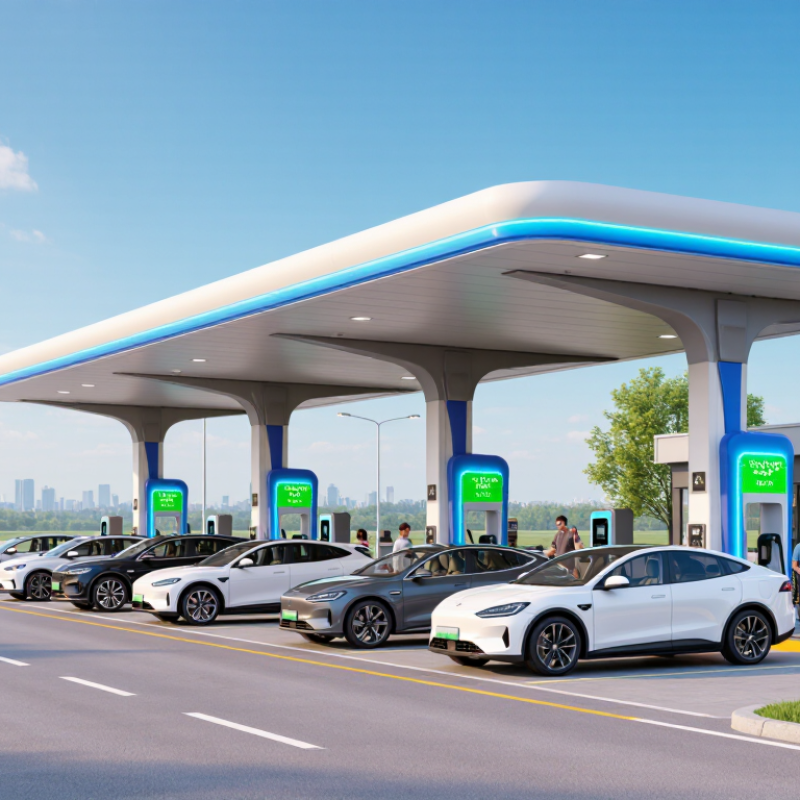
Define the Best DC Fast Charger by Power, Reliability, Coverage, and Cost
What Is the Best DC Fast Charging Station in China?
The best DC fast charger is not simply the unit with the highest advertised output. Power matters when a vehicle can accept it and the site can supply it. A 250 kW charger may add little value to a car limited to 100 kW. The China Electric Vehicle Charging Infrastructure Promotion Alliance reported about 1.39 million public DC charging piles by the end of 2024. Scale is impressive. But a large national network does not guarantee convenient charging at one highway rest stop.
Reliability deserves equal weight. Check whether chargers are consistently available, payment works, and connectors are maintained. A dark screen or a damaged cable can turn a fast stop into a long wait. Public reports do not always provide comparable, site-level uptime figures, so operators should publish fault rates and repair times. Coverage is practical, not just geographic: look for working chargers near travel routes, service areas, and urban destinations. The International Energy Agency’s Global EV Outlook 2024 documents China’s extensive public charging expansion, but local distribution still matters to drivers.
Cost means more than the posted price per kilowatt-hour. Service fees, time-based charges, and peak-period electricity rates can change the final bill. Compare a sample charging receipt, not just the headline tariff. There is an imperfect trade-off: a cheaper site with unreliable equipment may cost more in lost time. Real-world performance is worth checking.
(Sources: EVCIPA, 2024 charging infrastructure statistics; IEA, Global EV Outlook 2024.)
China Had 1.356 Million Public DC Charging Piles at End-2024 (EVCIPA)
What Is the Best DC Fast Charging Station in China?
EVCIPA reported 1.356 million public DC charging piles in China at the end of 2024. That figure shows the scale of the network. It does not tell drivers which station is best. A pile count is not the same as a count of sites, and it cannot show whether a connector is working right now.
For a real trip, the best station is usually the one that fits the car, route, and charging window. Check the listed power, connector compatibility, live availability, and access hours before setting off. A high-power unit may still charge slowly if the vehicle cannot accept its full output. Location matters, too: a station near a highway exit can save time, while a crowded urban site may mean a queue. Small details count. Clear bay markings and reliable payment can make a cold, late-night stop less stressful.
The national total is useful context, not a service-quality score. Public data may lag behind repairs or new installations, so verify station status in a live charging map when possible. I would be cautious about calling any single site the best across China; local uptime and demand change the answer.
Compare Major Networks by Site Coverage, Charger Output, and Uptime
In China, the best DC fast-charging network depends on where you drive. A network with many city sites may serve daily trips well, yet leave long gaps between highway stops. Compare map coverage across your actual routes, including smaller cities and rest areas. Look for several charging sites near key junctions, not one isolated pin. That matters when a station is full or out of service. A map can look reassuring. Sometimes it isn’t.
Charger output is another useful measure, but the listed kilowatt rating is only part of the story. Vehicles accept power at different rates, and shared equipment or a cold battery can slow charging. Check whether sites offer a mix of high-output chargers and more widely available units. Uptime deserves equal attention. Recent status updates, working connectors, and clear fault reporting tell you more than a large site count alone. I would compare recent user reports with live availability, while treating both cautiously; reports can be outdated. A network that covers your route, delivers practical charging speeds, and keeps equipment available is usually the stronger choice. The trade-off is real.
China Public Charging Infrastructure: DC vs. AC Chargers (2020–2024)
China’s public charging infrastructure has expanded rapidly. These national totals show installation scale, not individual network site coverage or charger uptime; comparable public network-level uptime data is not available. AC counts are calculated as total public chargers minus DC chargers.
Source: China Electric Vehicle Charging Infrastructure Promotion Alliance (EVCIPA), year-end cumulative public charging-pile statistics. Values shown in millions.
Check GB/T 20234 Compatibility and Your Vehicle’s Maximum Charging Rate
The best DC fast charging station in China is not always the one with the highest number on its cabinet. Check that its connector and communication system match your vehicle’s GB/T 20234 requirements. A plug that looks right is not enough; confirm the exact inlet standard in the vehicle manual or charging-port label. Small details matter.
Then compare the station’s rated output with your car’s maximum DC charging rate. If a vehicle accepts up to 90 kW, a 240 kW charger will not make it charge at 240 kW. Actual speed can also fall as the battery fills, or when it is cold or hot. Some stations share power between connected vehicles, so the displayed rating may not be available to each car. A specification sheet can still mislead.
Before choosing a site, check its connector details, live availability, and recent user reports. If possible, test charging early in a trip, when you have time to respond to a failed handshake or slower-than-expected output. Note the battery’s starting charge and temperature; otherwise, comparing two stations is a bit like comparing different conditions. That is an imperfect method, but it is more useful than judging by peak power alone.
Choose a Station Based on Route, Battery Size, and Available Charging Power
Choosing a DC fast charging station in China starts with the route, not the biggest number on the screen. The International Energy Agency’s Global EV Outlook 2024 reports nearly 2.7 million public charging points in China in 2023. Availability is broad, but a charger’s rated output does not guarantee your car can use it. Check the vehicle’s peak DC charging rate and the station’s connector and power before driving there.
Battery size sets the energy needed. For a 60 kWh battery, moving from 20% to 80% requires about 36 kWh, before charging losses. At a steady 100 kW, that looks like roughly 22 minutes; in practice, temperature, battery limits, and charging speed tapering can add time.
Power is not speed. I would treat any simple estimate as a planning guide, not a promise.
For a long highway leg, choose a reliable stop near your route and leave a sensible reserve, rather than detouring for a higher-rated unit. For city use, a lower-power stop may suit a longer break. Check live availability, too; a fast charger occupied by another vehicle changes the calculation. The detail I still find easy to overlook is battery temperature: a cold pack may charge more slowly, even at a powerful station.