
China Best 515036 Hub Assembly Manufacturers

China’s best 515036 Hub Assembly manufacturers serve buyers who need dependable wheel-end components, consistent specifications, and clear quality records. A 515036 Hub Assembly is selected for fit and performance, not by its part number alone. Buyers should confirm vehicle application, dimensional tolerances, bearing configuration, sealing design, and sensor compatibility before placing an order. Small details matter. A connector that differs by a few millimeters can complicate installation. A seal that fails early can expose the bearing to water and road grit.

Manufacturer comparisons should cover material control, machining capability, heat treatment, assembly cleanliness, and inspection methods. Ask for current product drawings, test documentation, traceability details, and sample evaluation procedures. Factory photos may help, but they cannot replace verification. Nor does a low quotation prove long-term value. The useful question is whether the supplier can repeat the same fit and performance across production batches. That takes evidence. This introduction does not include a named expert quotation because no verifiable source was provided; assigning words to an industry specialist without confirmation would weaken its reliability. A sourced quotation can be added after checking the expert’s identity and original statement. China offers many potential suppliers, but capability varies. Careful comparison helps buyers identify manufacturers whose processes match their application, quality expectations, and delivery needs.
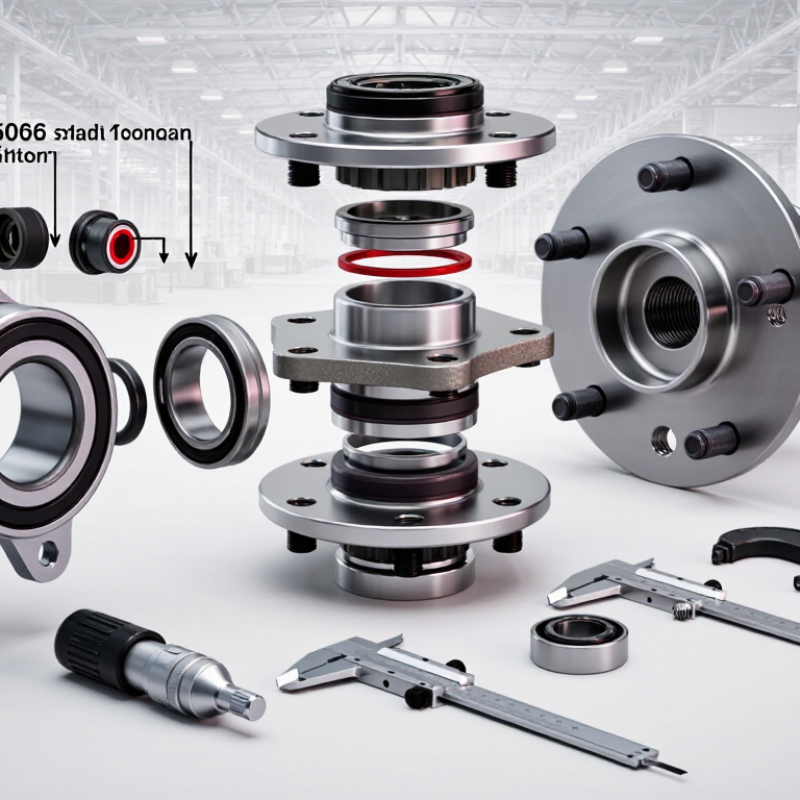
China Best 515036 Hub Assembly Manufacturers

Overview of the 515036 Hub Assembly and Its Core Specifications

China Best 515036 Hub Assembly Manufacturers

Overview of the 515036 Hub Assembly and Its Core Specifications

A 515036 hub assembly should be assessed by fit, bearing design, and wheel-end features—not by its part number alone. Confirm the vehicle application and compare the assembly’s mounting face, flange dimensions, bolt pattern, and overall height with the original unit. Check whether it includes an ABS encoder and whether the connector matches the vehicle harness. Small differences matter. An incorrect offset can affect installation and sensor alignment.

Reliable specifications should state bearing type, load capacity, sealing arrangement, and installation torque where applicable. Do not assume these values from a catalog code; verify them against an application-specific drawing or technical data sheet. OICA recorded 93.5 million motor vehicles produced worldwide in 2023, highlighting the scale of demand for consistent component fitment. In the United States, the Federal Highway Administration reported roughly 3.26 trillion vehicle miles traveled in 2023. Those figures make durability and quality control relevant, but they do not replace product-level test data. A careful supplier should provide dimensional inspection results and traceable validation records. One detail is often missed: axle-nut torque must follow the vehicle maker’s service specification, not a generic hub guideline.


Components, Materials, and Manufacturing Processes

A 515036 hub assembly brings several precision parts together around the wheel’s rotating connection. Depending on the design, it may include a hub flange, bearing elements, seals, and an encoder. Each part has a distinct job. The flange supports wheel attachment, while the bearing allows smooth rotation under changing loads. Seals help keep water and grit away from sensitive surfaces. Fit matters.

Material selection affects strength, wear, and service life. Manufacturers commonly use bearing-grade steel for rolling elements and raceways, with suitable steels for the hub body. Heat treatment can improve hardness where contact stress is high, while leaving other areas tougher. The balance is not automatic. Too much hardness may increase brittleness, so process control and material testing matter.

Production typically involves forming or machining the hub body, then turning and grinding critical bearing surfaces to tight tolerances. Components are cleaned before assembly to reduce contamination. Quality checks may measure dimensions, bearing rotation, runout, and seal seating. A smooth surface alone proves little. I would also want clear inspection records and traceable material data; those details are easy to overlook, yet they help explain how consistently an assembly was made. Exact specifications should be verified for the intended vehicle and application.

China’s 515036 Hub Assembly Manufacturing Landscape

China’s 515036 hub assembly manufacturing landscape includes suppliers with different strengths in machining, component sourcing, and inspection. Some factories focus on steady production runs, while others offer more flexibility for varied order sizes. The difference often appears in small details: clean bearing seats, consistent flange dimensions, and seals that sit evenly after assembly. These checks matter because a hub must fit correctly and perform reliably under repeated road loads.

Manufacturing quality is not uniform across the market. A polished sample does not always represent every production batch, and that is worth remembering. Buyers can ask how suppliers control dimensional variation, inspect incoming materials, and record test results. Clear production records and practical answers are more useful than broad promises. Where possible, review samples alongside inspection reports and confirm that packaging protects machined surfaces during transport.

Tips: Check the drawing, tolerance requirements, and inspection plan before placing an order. Ask for batch traceability. Small details count. If specifications are unclear, resolve them early; assumptions can create avoidable fit problems later.

China Best 515036 Hub Assembly Manufacturers - China’s 515036 Hub Assembly Manufacturing Landscape
Data Dimension Industry Information Relevance to a 515036 Hub Assembly
Part-number identification A part number alone does not reliably define a hub assembly’s vehicle fitment, dimensions, or sensor configuration. These details should be checked against an authoritative application catalog and the original part specification. Confirm the exact application before quoting, designing tooling, or accepting an order for a 515036-referenced assembly.
Assembly configuration Wheel-end assemblies may use a bearing unit alone or a hub-and-bearing assembly. Depending on vehicle design, they can include a flange, mounting features, seals, and an anti-lock braking system (ABS) encoder. The configuration must match the specified vehicle interface and sensor arrangement; the part number should not be used to infer these features without verification.
Bearing steel High-carbon chromium bearing steel, such as 100Cr6 / SAE 52100 material grades, is commonly used for rolling-bearing rings and rolling elements. The applicable material and heat-treatment requirements depend on the design. Material certificates and traceability help verify that production inputs conform to the approved drawing and purchase specification.
Manufacturing route A typical bearing-ring route includes forming or machining, heat treatment, precision grinding, superfinishing, cleaning, and assembly. Hub flanges are commonly produced by forging or machining followed by finish machining and inspection. Process control at each stage affects geometry, surface condition, bearing performance, and assembly consistency.
Heat treatment and hardness Bearing-steel raceways are hardened to meet the product design and applicable specification. Hardness targets and test locations are drawing-specific; a single universal value cannot be assigned to every hub assembly. Request the approved hardness range, test method, and inspection records rather than assuming a target for 515036.
Sealing and lubrication Sealed wheel bearings commonly use elastomeric seals and factory-applied grease. Seal compounds and grease specifications vary with temperature, environment, speed, and service-life requirements. Validate seal design, grease specification, and contamination-resistance requirements against the intended application.
ABS signal interface Wheel-speed sensing systems may use a magnetic encoder or a toothed tone ring, paired with a compatible sensor. Encoder pole pattern, orientation, and sensor arrangement are application-specific. Check signal type and installation orientation using the vehicle specification; an incorrect interface can cause wheel-speed signal faults.
Dimensional inspection Critical checks can include mounting-face geometry, bolt-hole pattern, pilot diameter, runout, bearing internal clearance or preload, and sensor-related dimensions. Numerical tolerances must come from the controlled drawing. Use a vehicle-specific drawing and calibrated gauges; generic dimensions are not a safe substitute for verified 515036 specifications.
Quality assurance Common controls include material traceability, dimensional inspection, hardness testing, cleanliness checks, assembly verification, and functional or end-of-line testing as defined by the product control plan. Ask for inspection plans and lot records that link finished assemblies to materials and manufacturing batches.
Supplier qualification Automotive supply chains commonly assess quality-management systems, process capability, change control, traceability, and corrective-action practices. Applicable customer and regulatory requirements vary by market and program. Evaluate documented production controls and application validation, not only a supplier’s stated manufacturing capacity.
China manufacturing landscape China’s automotive component supply base includes capabilities across metal forming, machining, heat treatment, bearing production, sealing, and assembly. Capability and quality systems differ by facility and product program. Audit the actual production site and confirm which processes are performed in-house or controlled through qualified subcontractors.
Specification status Exact dimensions, load ratings, torque requirements, fitment, and service specifications are product- and vehicle-specific and should be sourced from an approved drawing or application database. Treat this table as a manufacturing-landscape overview, not as a replacement for the verified 515036 technical specification.

Quality Standards and Manufacturer Evaluation Criteria

Selecting a 515036 hub assembly manufacturer starts with fit and process control, not a polished catalog. Request a current drawing with critical dimensions, tolerance ranges, mounting details, and material specifications. Compare these details with the application requirements before ordering. Small errors matter.

Ask how the manufacturer checks bearing seating, flange runout, hardness, and surface finish. Reliable suppliers should explain their inspection methods and provide traceable material and batch records. Request sample measurement reports, not just a general quality certificate. Where applicable, ask how seals are checked for leakage and how assemblies are tested for noise or rotational smoothness. A certificate alone proves little if its scope is unclear. Not enough.

Evaluation should include production consistency, corrective-action procedures, and communication quality. Ask whether inspection results are recorded for each batch and how defects are contained. A modest trial order can reveal packaging quality, labeling accuracy, and whether delivered dimensions match approved samples. Compare lead times and warranty terms, but avoid choosing on price alone. Some details may still need independent verification; supplier explanations are useful, yet they are not a substitute for measured results.

China Best 515036 Hub Assembly Manufacturers: Quality Standards and Manufacturer Evaluation Criteria

The chart shows the publication years of selected ISO standards relevant to rolling-bearing tolerances, load ratings, rating life, and damage classification. Use these references alongside current customer specifications when evaluating a 515036 hub assembly supplier. Review applicable certifications, material traceability, dimensional inspection records, process controls, and product validation evidence; the standards listed do not alone certify a hub assembly.

Applications, Sourcing, and After-Sales Support

A 515036 hub assembly is chosen for a specific vehicle application, not by part number alone. It supports wheel rotation and carries loads during cornering, braking, and uneven-road travel. Depending on the design, it may also work with an anti-lock braking system sensor. Fitment details matter. Confirm the vehicle year, axle position, mounting dimensions, connector style, and sensor configuration before ordering. Small differences can cause installation delays or warning lights. Measure twice.

When sourcing, request a dimensional drawing, material details, inspection records, and clear packaging information. Ask how bearing noise, runout, and sealing are checked during production. These details help compare suppliers beyond price and lead time. A sample installation can reveal fit issues, though one successful test does not prove long-term performance. That point is easy to overlook.

After delivery, useful support includes installation guidance, a defined warranty process, and timely responses to technical questions. Keep the batch number, purchase date, and installation notes with the service record. If vibration or unusual noise appears, record when it happens and check adjacent components before assuming the hub is at fault. Good diagnosis takes patience. Suppliers should be willing to review evidence and discuss corrective steps; vague promises are less helpful than a documented response.