Finding reliable cat parts suppliers worldwide requires more than comparing prices. It requires evidence, traceability, and practical experience with heavy equipment maintenance. Caterpillar reported 2024 sales and revenues of approximately $64.8 billion, showing the scale behind global machine support. That scale also creates complexity. Parts may cross several borders before reaching a workshop.
Caterpillar Chairman and CEO Jim Umpleby has stated, “Our customers are at the center of everything we do.” This principle matters when evaluating suppliers. A dependable source should identify part numbers clearly, confirm compatibility, and provide consistent technical documentation. Photos of stamped markings, sealed packaging, and inspection records can reveal more than a polished website. Small details matter.
UNCTAD’s Review of Maritime Transport reports that more than 80% of global merchandise trade moves by sea. Therefore, delivery planning must include port delays, customs documentation, and regional stock availability. A supplier claiming worldwide coverage may still lack local inventory. That weakness can stop a machine for weeks.
Industry buyers should compare warranty terms, return procedures, testing standards, and customer references. ISO certification may support credibility, but it does not guarantee every shipment. No supplier scorecard is perfect. I have seen buyers overlook communication quality while focusing on discounts. That mistake becomes expensive when an excavator waits for one hydraulic seal.
Reliable cat parts sourcing is a continuous verification process. The strongest suppliers welcome questions, disclose limitations, and provide measurable service commitments. Availability is useful. Accountability is better.
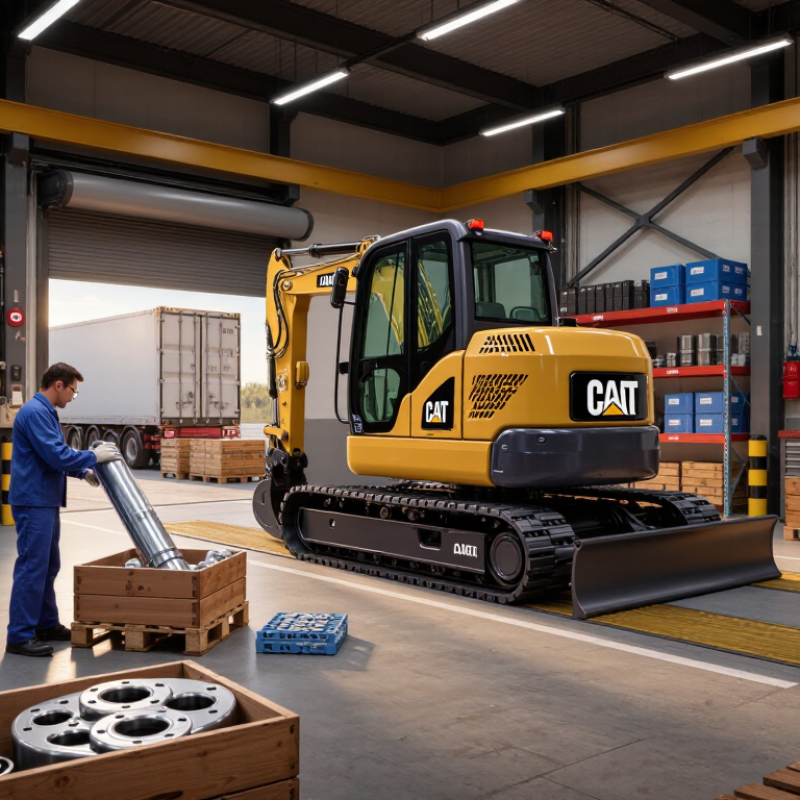
Finding reliable heavy-equipment parts suppliers worldwide starts with precise requirements. Record the machine model, part number, dimensions, material, quantity, and operating environment. Add photos showing bolt holes, seals, threads, and surface wear. A vague request often creates an expensive mismatch.
Think about performance, not only price. Confirm whether you need an original, aftermarket, refurbished, or custom-made component. Ask for material specifications, inspection records, batch traceability, and test results. Review the supplier’s production experience, quality system, export history, and warranty terms. Clarify lead times, packaging, payment stages, shipping responsibilities, and return procedures before ordering. Request a sample when practical. Check its fit under real working conditions. During my own sourcing work, I once trusted a polished quotation too quickly. The dimensions were correct, but the seal material failed in cold weather. That mistake changed my supplier checklist.
Tips: Prepare a one-page requirement sheet. Use exact measurements and clear photos. Ask suppliers to confirm every specification in writing. Compare at least three qualified suppliers, but do not treat the lowest offer as the safest choice. Check communication quality through technical questions. Reliable suppliers explain limitations instead of promising everything. They should identify unavailable data and suggest controlled testing. Keep inspection photos, invoices, certificates, and correspondence in one traceable file. Small gaps matter. Recheck them.
Supplier credentials deserve careful checking before any purchase. Ask for the registered company name, operating address, export history, and current business certificate. A serious supplier should provide verifiable contact details and professional product documentation. Request references from buyers who purchased similar excavator or engine parts. Then contact those buyers independently.
Product authenticity requires more than attractive photographs. Ask for clear images of packaging, casting marks, serial numbers, and production labels. Compare these details with official technical documents or service manuals. Request traceability records, including batch numbers and manufacturing dates. A supplier who avoids simple questions may create expensive problems later.
Quality standards should appear in measurable evidence. Request material certificates, dimensional inspection reports, hardness results, and pressure-test records when relevant. ISO-based quality systems can indicate structured production, but certification alone proves little. Check whether the certificate matches the factory and remains valid. A small sample order can reveal surface finish, fit, packaging, and delivery discipline.
Do not ignore minor defects. They may expose weak inspection practices. A polished website is not proof.
I have learned that fast replies can still hide incomplete records. Independent inspection costs money, yet replacing failed parts costs more. Keep written specifications, agreed tolerances, warranty terms, and delivery conditions before payment.
Finding reliable CAT parts suppliers worldwide requires more than comparing the lowest online price. Request a formal quotation with the part number, revision, condition, warranty, shipping method, and delivery estimate. Compare the landed cost, including packaging, freight, insurance, and import fees. A cheaper quotation may become expensive after delays or replacement costs. Check whether the supplier provides clear invoices and traceable product records.
Availability should be measured realistically. Ask whether the part is physically stocked or only available through another distributor. Request dated warehouse photos when the order is urgent. Confirm dispatch time, tracking details, and the supplier’s return procedure. Short answers are warning signs. Still, stock claims can change quickly, especially during seasonal demand.
Compatibility needs careful verification. Share the machine model, serial number, engine configuration, and existing part number. Compare mounting holes, dimensions, connector shapes, hydraulic ratings, and material specifications. A visually similar component may fail under pressure. Ask for inspection reports, measurement sheets, and performance-test records when possible. Independent technical checks add confidence, but they also cost time. That trade-off is easy to underestimate. Keep written records of every confirmation, because one unrecorded revision can turn a correct order into an unusable part.
Regional benchmark for comparing typical aftermarket cat parts sourcing conditions by price, availability, lead time, and compatibility verification.
The chart uses normalized benchmark data: lower price and lead-time scores indicate more favorable sourcing conditions, while higher availability and compatibility scores indicate stronger supplier reliability. Actual results vary by part number, machine model, order volume, certification requirements, and shipping route.
Reliable heavy-equipment parts suppliers should prove more than product availability. Shipping performance matters because maritime transport carries over 80% of global merchandise trade, according to UNCTAD’s Review of Maritime Transport 2023. Ask for transport options, tracking events, delivery estimates, and insurance terms. A supplier should also provide export documents before dispatch. Small paperwork errors can delay a crate for weeks.
Customs support deserves close attention. The World Bank’s 2023 Logistics Performance Index evaluates 139 economies across customs, infrastructure, tracking, and timeliness. Use these indicators when comparing a supplier’s shipping routes. Request accurate tariff codes, commercial invoices, packing lists, and country-of-origin details. Do not accept vague promises such as “customs is guaranteed.” Duties and clearance decisions remain country-specific. I have seen low freight prices become expensive after storage fees and unexpected taxes.
Tips: Request a written warranty covering parts, labor, return shipping, and exclusions. Confirm the claim process before payment. Reliable after-sales teams provide technical documents, photos, and a named contact. Service quality is difficult to measure, so test response times with practical questions. Keep every quotation and inspection record. A perfect supplier may not exist; even experienced buyers can overlook compatibility or installation conditions. Recheck serial numbers, dimensions, and seal quality before fitting the part.
| Evaluation Area | Key Metric | Reliable Supplier Indicator | Recommended Verification Method | Common Warning Sign | Priority |
|---|---|---|---|---|---|
| Shipping | Transit-time commitment | Provides a written estimated delivery window based on the selected transport mode and destination. | Request shipping quotes for the same product, quantity, destination, Incoterm, and transport mode. | Only gives vague promises such as “fast delivery” without a delivery range. | High |
| Shipping | Transport options | Offers practical choices such as express courier, air freight, sea freight, or multimodal delivery. | Compare the total landed cost and delivery time for at least two transport options. | Provides only one shipping method or cannot explain routing limitations. | High |
| Shipping | Shipment tracking | Supplies a valid tracking number or freight reference and updates shipment status after dispatch. | Check whether the tracking information can be verified through the carrier or freight forwarder. | Tracking details are delayed, invalid, or unavailable after payment. | High |
| Shipping | Packaging protection | Uses moisture-resistant, impact-resistant packaging suitable for heavy metal components and long-distance transport. | Ask for packaging specifications, photographs, and the planned protection for fragile or precision parts. | Parts are shipped with inadequate cushioning, unclear labeling, or no protection against moisture. | Medium |
| Customs Support | Commercial documentation | Can prepare accurate commercial invoices, packing lists, transport documents, and certificates when required. | Request a sample document set with product description, quantity, value, country of origin, and HS classification. | Documents contain incomplete descriptions, inconsistent values, or missing country-of-origin information. | High |
| Customs Support | HS code assistance | Provides a proposed HS code for customs review while making clear that the importer remains responsible for final classification. | Confirm the proposed code with a licensed customs broker or the destination-country customs authority. | Guarantees that no duty or tax will apply without checking the destination and product classification. | High |
| Customs Support | Incoterm clarity | Clearly states whether the quotation is EXW, FCA, FOB, CIF, DAP, DDP, or another agreed Incoterm. | Ask which party pays freight, insurance, import duties, customs clearance, and last-mile delivery. | Offers a single “delivered price” without identifying included and excluded charges. | High |
| Customs Support | Import-charge transparency | Separates product price, freight, insurance, duties, taxes, brokerage, and destination handling fees. | Calculate the expected landed cost before placing the order and compare it with the supplier’s quotation. | Unexpected destination charges appear after dispatch or the supplier refuses to explain them. | High |
| Warranty | Warranty duration | Provides a written warranty period and start date, commonly linked to shipment, delivery, or installation. | Review the warranty document and confirm how coverage is affected by storage, installation, and operating conditions. | Warranty terms exist only in informal messages or exclude nearly all practical failure scenarios. | High |
| Warranty | Coverage scope | Defines covered defects, excluded damage, required evidence, labor responsibility, and replacement procedures. | Ask for a written example showing how a defective part would be inspected and resolved. | Uses broad language such as “quality guaranteed” without specific coverage conditions. | High |
| Warranty | Product traceability | Uses part numbers, batch numbers, serial numbers, or production records to trace supplied components. | Check whether the supplier can match a sample part to an inspection or production record. | Parts have unclear identification, inconsistent labels, or no traceable batch information. | High |
| Warranty | Inspection and testing | Can provide dimensional checks, material information, functional tests, or a certificate of conformity when applicable. | Request an inspection report or agree on pre-shipment inspection criteria before production. | Rejects reasonable inspection requests or cannot define acceptance criteria. | High |
| After-Sales Service | Response time | Acknowledges technical or order-related inquiries within one business day and gives a clear next step. | Send the same technical question to shortlisted suppliers and compare response speed and accuracy. | Replies are delayed, incomplete, or handled by staff who cannot access order records. | High |
| After-Sales Service | Returns and replacement process | Defines return authorization, evidence requirements, inspection timing, replacement shipping, and refund conditions. | Request a written workflow for incorrect, damaged, defective, or incompatible parts. | Requires the buyer to return goods at personal cost without explaining the inspection outcome or remedy. | High |
| After-Sales Service | Technical support | Can assist with part identification, compatibility checks, installation information, and troubleshooting. | Provide a real application scenario and evaluate whether the supplier asks for model, serial, and operating details. | Confirms compatibility from a photograph alone or avoids requesting essential equipment information. | High |
| After-Sales Service | Spare-parts availability | Maintains replacement-part availability and communicates lead times for standard and special-order components. | Ask for current stock status, replenishment frequency, and expected lead time for repeat orders. | Cannot confirm whether the same specification will remain available for future maintenance. | Medium |
| Supplier Reliability | Payment protection | Uses a documented payment process with an invoice, clear terms, and an identifiable legal business entity. | Verify bank-account details independently and avoid changing payment instructions based only on email. | Pressures the buyer to use personal accounts, untraceable payments, or urgent transfers. | High |
| Supplier Reliability | Order consistency | Maintains consistent part specifications, packaging, documentation, and delivery performance across repeat orders. | Start with samples or a small trial order and record quality, lead time, documentation, and communication results. | Sample quality is strong but the supplier refuses written specifications for production orders. | High |
Evaluation reference: shipping times, duties, taxes, warranty terms, and customs requirements vary by destination, product classification, transport mode, and contract terms. Confirm final conditions in writing before payment.
A reliable cat parts supplier should become more than a seller. They should understand your equipment, operating conditions, and maintenance schedule. During supplier checks, request clear product specifications, material details, and inspection records. Photos are useful, but they are not enough. Ask for dimensional reports on seals, bushings, filters, and undercarriage components.
Long-term trust grows through small, repeatable actions. Test a limited order before committing to regular purchasing. Measure fit, surface finish, packaging quality, and delivery accuracy. Keep notes from installation. A supplier who welcomes technical feedback is easier to work with. So is one who answers within an agreed timeframe. Confirm replacement policies, payment terms, production capacity, and export documents in writing. Verbal promises can become unclear across time zones.
Communication needs practical structure. Send part numbers, machine models, drawings, and working photographs when possible. Explain whether the parts face dust, heat, water, or heavy vibration. This helps the supplier recommend suitable materials instead of guessing. Monthly demand forecasts can support stable production, but forecasts change. Mine did. Recheck quantities before each purchase. One mistake in a large order can tie up cash and warehouse space. I have also learned that the lowest quotation may hide weaker inspection or inconsistent packaging. A dependable partnership requires regular review, honest correction, and patience from both sides.