What Is the Difference Between OEM and Aftermarket Car Parts?
Choosing between OEM and aftermarket car parts can feel like comparing two identical keys. One may fit perfectly, while the other needs adjustment. This difference matters when selecting parts car parts for a daily driver, restoration project, or urgent repair.
OEM parts come from the vehicle’s original manufacturer or its approved supplier. They usually match factory specifications, finish, and mounting points. An aftermarket part comes from an independent producer. Its quality can range from excellent to disappointing. The box may look convincing. The fit may still be wrong.
Automotive parts expert Richard Reina offers a practical reminder: “The right replacement part is the one that restores safe, reliable function, not simply the one with the lowest price.” That principle guides this comparison. Buyers should check the VIN, part number, warranty terms, and installer feedback before ordering. A headlamp should align with the fender. A brake component should meet the vehicle’s required specifications. Small mismatches can create noise, vibration, extra labor, or safety concerns.
Price is only one part of the decision. OEM components often provide predictable compatibility, while reputable aftermarket parts may offer useful upgrades or savings. However, “aftermarket” is not a quality guarantee. That assumption deserves more thought.
This guide examines fit, materials, durability, warranty support, and real-world value. It also considers when an aftermarket option makes sense and when an OEM part remains the wiser choice. The answer is rarely absolute. Even experienced buyers can overlook one detail.
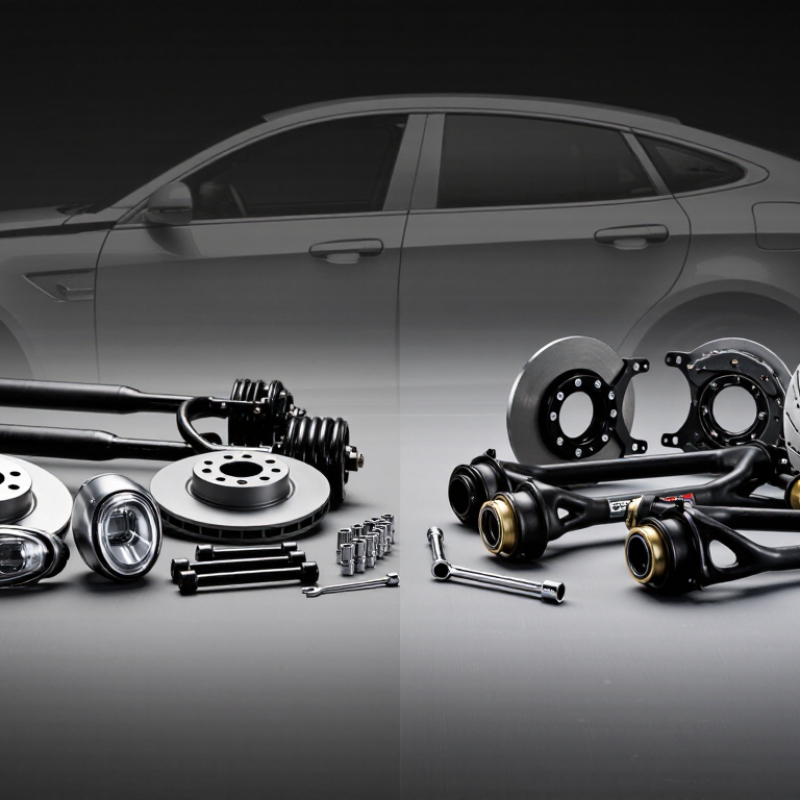
What OEM and Aftermarket Car Parts Mean
What OEM and Aftermarket Car Parts Mean
OEM stands for Original Equipment Manufacturer. An OEM part is made to match the specifications used for a vehicle’s original component. It usually matches the factory part’s shape, materials, and connection points. A replacement door handle should fit without forcing the screws or trimming the panel. That predictable fit can save time during repairs. However, OEM does not always mean the best choice for every budget or driving situation.
Aftermarket parts are produced by independent manufacturers. They may follow the original dimensions, improve a weak design, or offer a lower-cost alternative. Quality can vary widely. One aftermarket brake pad may feel smooth and quiet, while another may create dust or noise. Check the part number, vehicle year, engine details, and required certifications before buying. A professional technician can also inspect the packaging and compare the new part with the removed one.
I once assumed a cheaper sensor would perform exactly like the original. It fitted correctly, but the warning light returned after several weeks. That experience changed how I judge price and value. Fitment matters, but material quality, testing, warranty terms, and installation conditions matter too. Some aftermarket parts perform well in demanding conditions, while some simply look convincing in a box. Keep the old part until the repair is confirmed. Small details often reveal larger problems.
How OEM Car Parts Are Made and Identified
An OEM part is built to an automaker’s original engineering specification, but the automaker may not manufacture it. Specialized suppliers often produce components using approved materials, tooling, and process controls. Engineers set dimensions, tolerances, electrical performance, and durability targets. During production, checks may cover fit, finish, and function, while batch records can connect a component to its manufacturing run. That distinction matters. OEM describes the specification and supply relationship, not necessarily the factory.
Identification usually starts with a molded or stamped part number, supplier code, date code, or package label. Compare the part number with a VIN-based catalog; a single model year can include midyear changes. A matching logo alone proves little. Marks and packaging can be copied, and labels may differ by region. S&P Global Mobility reported that the average age of U.S. light vehicles reached 12.6 years in 2024. With vehicles staying on the road longer, fitment and traceability matter more. Still, an OEM label is not a perfect quality test. Check the part itself and verify its number against a reliable catalog or repair record.
How Aftermarket Car Parts Differ in Quality and Design
OEM parts are produced to match the vehicle’s original specifications. Their dimensions, materials, and testing standards usually follow the factory design. An aftermarket part may serve the same function, but its quality can vary widely. Some use thicker metal or improved seals. Others may rely on cheaper plastics and simpler machining. Fit can vary.
During repairs, I have seen a small design change create a large problem. A replacement bumper may look correct but leave uneven gaps near the headlamp. A brake component may fit the mounting points yet produce different pedal feedback. These details affect noise, vibration, durability, and safety. Professional technicians compare material quality, warranty terms, test results, and installation instructions before choosing a part. Price alone is a weak guide.
Aftermarket parts can also offer useful design improvements. A revised filter housing might simplify maintenance, while a stronger suspension component may suit demanding road conditions. However, “upgraded” does not always mean better for every vehicle. Incorrect hardness, weight, or electrical resistance can cause premature wear or warning lights. I would still check compatibility by vehicle year, engine specification, and exact part number. That step is easy to overlook. Even experienced installers can make mistakes when catalog data is incomplete or an apparently identical part has different tolerances.
What Is the Difference Between OEM and Aftermarket Car Parts?
| Comparison |
OEM Parts |
Aftermarket Parts |
| Meaning |
Parts supplied for a vehicle’s original equipment service channel, generally made to the vehicle manufacturer’s specifications. |
Replacement parts made by companies other than the vehicle’s original equipment supplier. They may be standard replacements or specialized alternatives. |
| Design and fit |
Designed for a specific vehicle application and typically intended to match the original part’s fit and function. |
Designs vary. Some are made to match original specifications; others may use different materials, shapes, or features. Confirm compatibility by vehicle details and part number. |
| Quality consistency |
Often offers consistent specifications for the intended application, though quality and performance still depend on the part and supplier. |
Quality ranges widely between manufacturers and product lines. Check specifications, testing information, materials, and supplier reputation rather than assuming all parts are alike. |
| Choice and design options |
Usually focuses on the original configuration and intended replacement function. |
Offers a broader range that can include direct-fit replacements, upgraded components, and parts designed for different budgets or uses. |
| Price |
Can cost more than some comparable alternatives, but pricing varies by part, vehicle, and seller. |
May be less expensive, similarly priced, or more expensive depending on the part’s materials, design, and performance claims. |
| Availability |
Availability can depend on the vehicle’s age, model, and local parts supply. |
Multiple suppliers may offer alternatives, which can increase choice; availability still varies by vehicle and part. |
| Warranty and support |
Warranty coverage and service support depend on the seller, vehicle, and applicable terms. |
Coverage varies by manufacturer and seller. Review the written warranty, exclusions, and return policy before purchase. |
| Best fit for |
Drivers who prioritize an original-spec replacement and a straightforward match for the vehicle. |
Drivers comparing price, features, or specialized options, provided the part is compatible and meets the required specifications. |
| Safety considerations |
Use the correct part for the vehicle and follow installation requirements, especially for safety-critical systems. |
Check fitment and applicable standards carefully. For brakes, steering, suspension, and other safety-critical systems, choose a properly specified part and qualified installation. |
Note: “OEM” and “aftermarket” describe where a part comes from, not a guarantee of quality. Compare the exact part’s compatibility, specifications, testing, warranty, and installation requirements.
OEM vs. Aftermarket Parts: Cost, Fit, Warranty, and Reliability
When a car needs a replacement part, the choice often starts with price. OEM parts follow the vehicle maker’s original specifications. Aftermarket parts come from independent manufacturers and may cost 20 to 50 percent less. In my repair experience, that saving matters when a customer faces a cracked mirror or worn brake component. However, the cheapest box is not always the cheapest decision. A poor fit can create extra labor, delays, and another purchase.
Fit is usually more predictable with OEM parts, especially for sensors, body panels, and electronic connectors. Aftermarket quality varies widely. Some components match factory measurements closely; others need adjustments during installation. I once saw a replacement panel with a small gap near the hood. It looked acceptable from across the lot, but wind noise appeared on the highway. That detail changed the repair estimate. I should have checked alignment before installation.
Warranty terms deserve equal attention. OEM coverage may be easier to verify, while aftermarket warranties differ in length, exclusions, and labor reimbursement. Reliability depends on design, materials, installation, and maintenance, not the label alone. Ask for test standards, return rules, and written coverage. A qualified technician can compare the part with service data. For safety-related parts, I prefer documented quality over a tempting discount. Still, no rule is perfect. Budget limits are real, and dismissing every aftermarket option would be careless.
How to Choose the Right Car Part for Your Vehicle
Choosing the right car part starts with the vehicle, not the price tag. OEM parts are made to the vehicle maker’s original specifications. Aftermarket parts come from independent manufacturers and may offer different designs, materials, or prices. Some perform very well, while others may create fitment problems.
Check the vehicle identification number, model year, engine type, and trim level before ordering. A part that fits one engine may fail on another. Read the technical description carefully. Compare dimensions, mounting points, material details, and included hardware. Do not guess. For brakes, steering parts, suspension components, and safety systems, professional advice is especially valuable. A qualified technician can inspect the old part and identify related damage.
I once chose a lower-priced replacement without checking the connector shape. It looked correct in the listing but needed an adapter. That mistake delayed the repair and increased the final cost. Now I verify fitment with the seller, review the warranty, and confirm the return policy before purchase. Look for traceable product information, clear testing claims, and installation instructions. Be cautious when a listing lacks measurements or uses vague language such as “fits most vehicles.” OEM may suit drivers who want predictable compatibility. A carefully selected aftermarket part may suit those seeking value or upgraded performance. The right choice depends on the vehicle’s condition, the part’s function, and the evidence behind its quality.