A car engine is not one expensive block; it is a network of parts that must work together. On a cold start, oil moves through narrow passages while pistons rise and fall inside the cylinders. That small moment reveals why fit, material quality, and lubrication matter. Buyers often focus on price or horsepower. Yet a worn gasket, weak water pump, or mismatched sensor can cause trouble elsewhere.
Racer and engine builder Carroll Shelby is often credited with this line: “There’s no such thing as too much horsepower, just not enough traction.” It is a useful reminder that performance depends on a whole vehicle, not one impressive component. The same logic applies under the hood. A timing belt, fuel injector, crankshaft, and spark plug each have a different job, lifespan, and failure pattern. Small parts count.
This guide introduces ten car engine parts every buyer should know, from the cylinder head to the oil filter. You’ll learn what each part does, what wear may look or sound like, and which details to check before buying a replacement. Compare fitment by engine code, not appearance alone. Check the manufacturer’s specifications, warranty, and return terms, too. A shiny part can still be wrong. And not every symptom points to the part that seems obvious. That can be frustrating. Diagnosis takes evidence, patience, and sometimes a qualified technician. These basics won’t make anyone an expert overnight, but they can help buyers ask sharper questions and avoid guesswork.
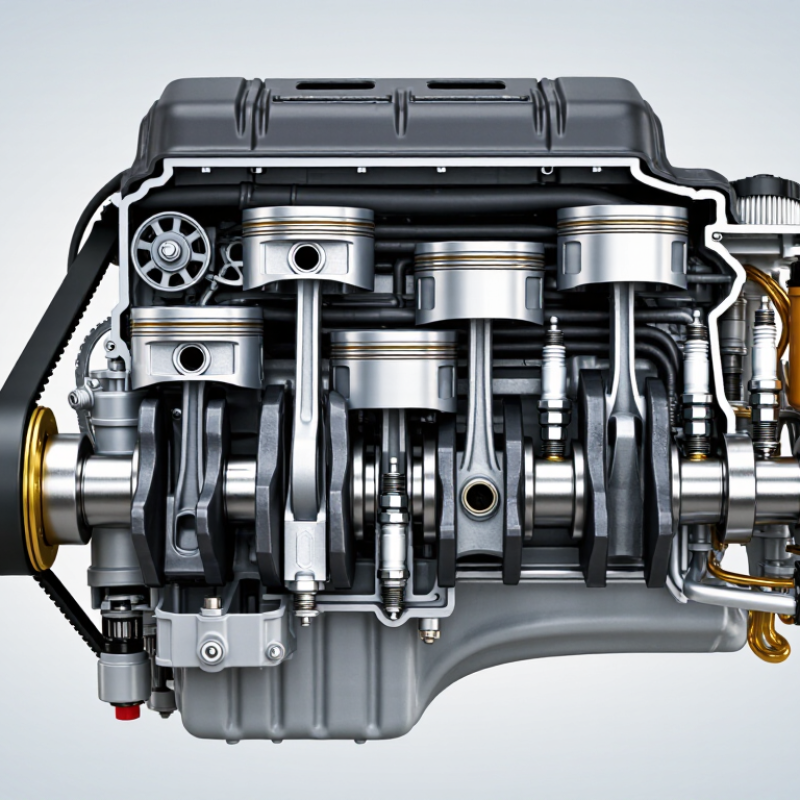
The engine block and cylinder head form the engine’s structural core. The block holds the cylinders and supports the crankshaft; the head closes the cylinders and contains passages for air, fuel, oil, and coolant. Their mating surface must remain flat and seal tightly. Even a slight warp can cause leaks or uneven compression. Small details matter.
When comparing replacement parts, check the casting for cracks, corrosion, damaged threads, and previous machining. Inspect the deck surface for gouges and ask whether the block or head has been pressure-tested. A shiny surface proves little. A clean casting can still hide trouble. The U.S. Department of Energy’s Vehicle Technologies Office reports that reducing vehicle weight by 10% can improve fuel economy by 6–8%. That figure applies to the whole vehicle, not one engine part, but it shows why material choice and sound engineering matter. Aluminum is lighter; cast iron is heavier and often robust. Neither is automatically the better buy.
Match the part to the engine’s exact configuration, including bore size, coolant passages, and sensor openings. Ask for measurements, not just a claim that it “fits.” A used head may look fine yet have a hairline crack near a valve seat. I’d treat missing test records as a reason to pause, not proof of failure. Replacement costs can climb quickly when a poor casting damages a gasket or causes overheating.
In a four-stroke engine, combustion pushes the piston down the cylinder. The connecting rod transfers that force to the crankshaft, which turns it into rotation. That’s the conversion. The crankshaft’s counterweights help balance motion, while bearing surfaces rely on a thin oil film to reduce wear. Small details matter: incorrect bearing clearance can disrupt lubrication, and a damaged piston ring can allow gases to escape.
The U.S. Department of Energy’s “Where the Energy Goes: Gasoline Vehicles” estimates that roughly 68–72% of fuel energy is lost as engine heat. That figure puts the parts’ job in perspective: converting combustion into useful motion is demanding, not perfectly efficient. When comparing replacement pistons or crankshafts, check dimensions, material specifications, and compatibility with the engine’s service data. A polished surface alone proves little. It is easy to overlook the measurements.
Tips: Confirm cylinder bore, piston diameter, and crankshaft journal measurements against the manufacturer’s service specifications. Inspect for scoring, cracks, and uneven wear. Ask for documented tolerances and material details, not just a claim that a part “fits.” If measurements are borderline, pause and verify them; guessing here can become expensive.
| Rank | Engine Part | Main Function | How It Contributes to Motion | Buyer’s Practical Check |
|---|---|---|---|---|
| 1 | Piston | Moves up and down inside the cylinder and forms a moving boundary for the combustion chamber. | Expanding combustion gases push the piston downward during the power stroke. | Check for cracks, scoring, damaged ring grooves, and signs of overheating. Confirm the piston matches the engine’s bore and design. |
| 2 | Crankshaft | Provides the engine’s main rotating output and supports the connecting rods. | Its offset crankpins convert the connecting rods’ reciprocating movement into rotation. | Inspect journals for scoring or heat damage, and verify that the shaft is correct for the engine and bearing sizes. |
| 3 | Piston Rings | Help seal combustion pressure, control the oil film on the cylinder wall, and transfer heat from the piston to the cylinder. | They help maintain compression as the piston travels through the cylinder. | Check for wear, breakage, and correct ring end gap. Ring fit and installation position must follow the engine specifications. |
| 4 | Wrist Pin (Piston Pin) | Connects the piston to the small end of the connecting rod. | Allows the connecting rod to pivot as the piston moves and the crankshaft rotates. | Look for scoring, wear, or discoloration, and confirm the pin diameter and fit are correct for the piston and rod. |
| 5 | Connecting Rod | Links the piston to a crankshaft crankpin and carries changing loads during engine operation. | Transfers force from the piston to the crankshaft and guides the conversion of reciprocating motion into rotation. | Inspect for bending, cracks, damaged bearing surfaces, or loose-fitting components. Match the rod to the engine configuration. |
| 6 | Main and Rod Bearings | Provide low-friction running surfaces for the crankshaft journals and connecting-rod big ends. | Allow the crankshaft to rotate while supporting loads from combustion and moving engine parts. | Check for wear, embedded debris, or uneven contact. Correct bearing clearance depends on the engine and must be measured. |
| 7 | Cylinder Block | Houses the cylinders and supports major components, including the crankshaft and, in many engines, the coolant and oil passages. | Provides the cylinder surfaces in which pistons move and the structural foundation for the rotating assembly. | Look for cracks, corrosion, damaged threads, and cylinder wear. Check bore condition and dimensions before selecting pistons. |
| 8 | Cylinder Head | Closes the top of the cylinders and commonly houses intake and exhaust passages, valves, and combustion-chamber features. | Helps control the flow of air and exhaust gases and forms part of the combustion chamber. | Check for cracks, warping, damaged sealing surfaces, and valve-seat wear. Design and inspection requirements vary by engine. |
| 9 | Valves and Camshaft | Valves control gas flow into and out of the cylinders; the camshaft operates the valves at timed intervals. | Correct valve timing allows fresh charge to enter and exhaust gases to leave in coordination with piston movement. | Inspect valve faces, stems, and cam lobes for wear or damage. Confirm timing components and specifications match the engine. |
| 10 | Oil Pump | Circulates engine oil through lubrication passages to moving components. | Maintains oil flow that helps reduce friction and wear at bearings and other lubricated surfaces. | Check for wear, contamination, and damage to the pickup or drive. Oil pressure and pump fit depend on the engine design. |
Engine layouts and specifications vary. Before buying parts, verify compatibility using the engine’s exact identification and service specifications.
The camshaft is the engine’s metronome. Its lobes push the valves open and let springs close them, coordinating airflow with piston movement. Valve timing affects how much air enters each cylinder and when exhaust leaves. Small timing errors matter. Variable valve timing can adjust valve events as engine speed changes, but it cannot compensate for neglect or worn parts.
At inspection, listen for rattling or ticking near the cylinder head, especially during a cold start. A stretched timing chain or worn tensioner may disturb camshaft timing; rough idling and reduced power can also be clues, though they have other causes. The U.S. EPA’s 2023 Automotive Trends Report estimated average real-world fuel economy for model-year 2022 vehicles at 26.4 miles per gallon. That fleetwide figure is not a camshaft test, but it shows why small efficiency gains across engines matter.
Ask for service records showing when the timing belt or chain was inspected or replaced. Check whether the engine has one or two camshafts per cylinder bank; more components can mean more repair complexity. A diagnostic scan may reveal camshaft-position faults, but a clean scan is not proof of perfect condition. I would treat unusually smooth sales talk with caution: a brief test drive may not reveal a timing problem.
Typical illustrative valve timing for a four-stroke engine, shown in crankshaft degrees.
In this example, the intake valve opens 10° before top dead center (BTDC) and closes 40° after bottom dead center (ABDC). The exhaust valve opens 40° before bottom dead center (BBDC) and closes 10° after top dead center (ATDC), creating 20° of valve overlap. Actual timing varies by engine design.
Fuel injectors deliver measured amounts of fuel into an engine’s cylinders or intake system. Their timing and spray pattern help create an even mixture with air. A restricted injector may contribute to rough idling, hesitation, or uneven acceleration, but those symptoms can also have other causes. Small parts, major effects.
Spark plugs provide the electrical spark that ignites the air-fuel mixture in gasoline engines. Worn electrodes or incorrect gaps can lead to misfires and harder starting. Look for plug specifications that match the engine, not just a similar shape or thread. Diesel engines generally use glow plugs for cold starting instead, so confirm the engine type before comparing parts. Do not guess.
When assessing a used car, ask when the plugs were last replaced and whether injector trouble codes or fuel-system repairs were recorded. A clean-looking plug does not prove that an injector works properly, and a warning light alone does not identify the faulty part. I would resist treating one symptom as a diagnosis; that is an easy mistake. A technician can check ignition performance and injector operation with suitable tests. Those checks may add time, but they are more useful than buying parts based on a hunch.
An oil pump keeps engine oil moving through narrow passages to bearings, camshafts, and other moving parts. The dashboard oil-pressure warning is not a routine reminder; it can signal that circulation has fallen dangerously low. Pressure matters. A low oil level, clogged pickup screen, worn pump, or unsuitable oil can contribute to poor lubrication. During inspection, check for leaks and listen for brief rattling after a cold start. That sound is not a diagnosis, but it deserves attention. Fresh oil alone cannot repair a failing pump, a detail easy to overlook when maintenance seems simple.
The water pump circulates coolant between the engine and radiator, helping control temperature in traffic and on long climbs. Some pumps are driven by a belt; others use electric motors. Heat builds fast. Look for dried coolant around the pump, a sweet smell, or looseness near the pulley. These clues warrant proper testing, not guesswork. Never open a hot cooling system: pressurized coolant can cause severe burns. A temperature gauge that rises unexpectedly also needs prompt investigation. It is tempting to blame the pump immediately, but a thermostat, leak, or blocked radiator can produce similar symptoms. Checking the whole cooling circuit gives a more reliable answer.