Who Are the Top Car Bearings Manufacturers in China?
China is a major source of automotive components, and its bearing sector includes large industrial groups, specialized suppliers, and export-focused factories. Yet “top” can mean different things. A manufacturer known for scale may not suit a low-volume program, while a smaller producer may offer closer engineering support. That distinction matters.
This guide examines leading car bearings manufacturers in China through practical questions buyers can verify: product range, production capacity, quality controls, technical support, delivery consistency, and experience with relevant vehicle applications. Product details deserve attention. A wheel hub bearing, for example, faces different loads and sealing demands from a transmission or engine bearing. Ask how samples are tested, what inspection records are available, and whether the supplier can explain its material and heat-treatment choices. Names matter. Details matter more.
Company websites and catalogs are useful starting points, not proof on their own. Buyers should compare specifications, request current documentation, and assess communication before placing an order. Independent audits or customer references can add context, where available. No single ranking fits every project. Requirements vary by vehicle design, operating conditions, target price, and expected service life. Some information may be difficult to confirm remotely; that is worth acknowledging rather than glossing over. The manufacturers discussed here are best viewed as candidates for closer evaluation, not automatic endorsements. A careful shortlist can help readers ask better questions and identify the supplier whose capabilities match their actual needs.
What Automotive Bearings Do and Where They Are Used
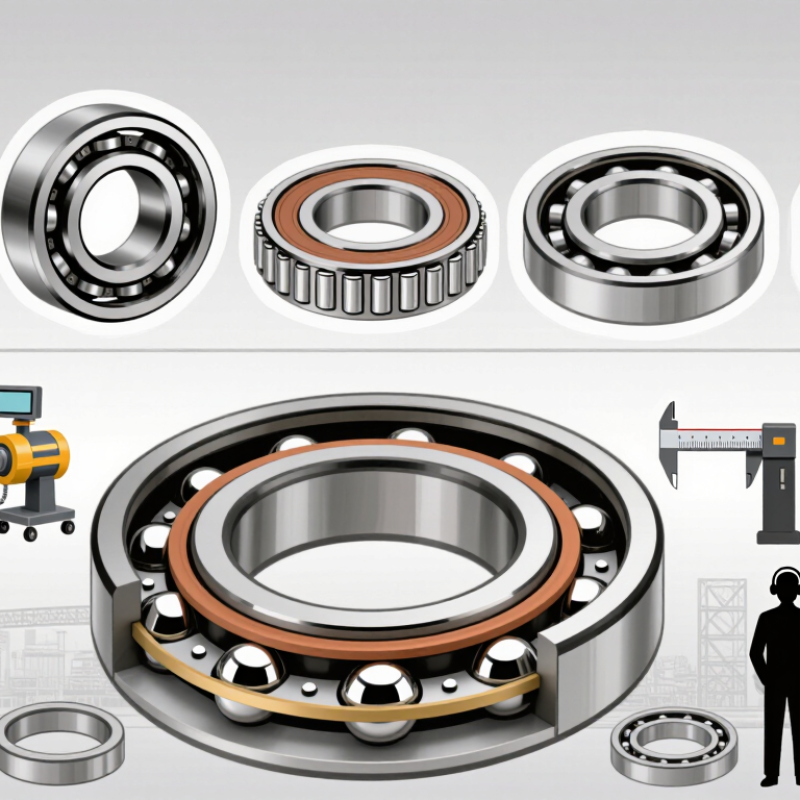
Automotive bearings guide rotating parts while carrying radial or axial loads. Their job is quiet, but demanding: a wheel-hub bearing must handle vehicle weight, cornering forces, water, and road grit. Tapered roller bearings are common in wheel hubs; ball bearings suit lighter, high-speed applications. Needle bearings fit where space is tight, including some transmission assemblies. Small parts, big consequences.
Bearings also work inside engines, gearboxes, electric drive units, steering systems, and belt-driven accessories. Each location brings different speeds, temperatures, lubrication needs, and vibration. The International Energy Agency’s Global EV Outlook 2024 reports nearly 14 million electric-car sales in 2023, about 18% of global car sales. That shift raises the importance of bearings designed for high-speed electric motors and quieter operation. The U.S. Department of Energy’s “Where the Energy Goes” chart estimates drivetrain losses at roughly 5–6% of fuel energy in conventional gasoline vehicles; that figure covers the drivetrain, not bearings alone. It would be misleading to credit bearings with all of those losses. A practical inspection also checks noise, heat, seals, and lubrication—not just bearing type. And real wear can be messy: contamination or poor installation may shorten service life, even when a part meets its design specification.
Who Are the Top Car Bearings Manufacturers in China? - What Automotive Bearings Do and Where They Are Used
Automotive bearings support rotating or moving components by reducing friction and carrying radial, axial, or combined loads. The table below summarizes common bearing types, their functions, and typical vehicle applications.
| Bearing type | What it does | Common vehicle locations | Typical applications | Key operating characteristics |
|---|---|---|---|---|
| Deep-groove ball bearing | Supports radial loads and moderate axial loads in either direction while allowing smooth rotation. | Alternators, electric motors, pumps, fans, and selected transmission components. | Auxiliary systems and rotating electrical or thermal-management components. | Compact, versatile, and suitable for relatively high rotational speeds. |
| Angular-contact ball bearing | Carries combined radial and axial loads; load capacity depends on its contact angle and arrangement. | Wheel hubs, transmissions, and selected electric-drive assemblies. | Applications requiring controlled axial support alongside rotation. | Often installed in matched or paired arrangements when axial loads act in both directions. |
| Tapered roller bearing | Handles substantial combined radial and axial loads through tapered rolling elements and raceways. | Wheel hubs, differentials, and some transmission or driveline assemblies. | Load-carrying wheel and drivetrain positions, particularly in heavier-duty applications. | Frequently arranged in opposing pairs; correct adjustment and lubrication are important. |
| Needle roller bearing | Carries high radial loads using long, small-diameter rollers within a compact cross-section. | Manual transmissions, automatic transmissions, and selected engine or driveline mechanisms. | Gear shafts, planetary gear sets, and pivoting or oscillating mechanisms. | Provides high radial load capacity where installation space is limited; generally offers limited axial-load capacity. |
| Cylindrical roller bearing | Supports high radial loads and accommodates relative axial displacement in designs intended for that purpose. | Transmission shafts, electric motors, and selected drivetrain assemblies. | Rotating shafts subject to significant radial loading. | Roller and raceway geometry provides a large contact area; axial-load capability varies by design. |
| Wheel hub bearing unit | Supports the wheel and transfers vehicle loads while allowing the wheel to rotate. | Front and rear wheel hubs. | Passenger cars, light commercial vehicles, and heavier vehicles, with configuration depending on the vehicle design. | Many modern units integrate bearing rows, seals, and mounting features; some also incorporate wheel-speed sensing components. |
| Thrust or axial bearing | Designed primarily to carry loads acting along a shaft’s axis. | Selected clutch, transmission, and drivetrain mechanisms. | Positions where axial force must be supported during operation. | Not all thrust-bearing designs can carry substantial radial loads; selection depends on load direction and speed. |
Bearing selection depends on load, speed, operating temperature, lubrication, sealing, available space, and service-life requirements. Actual locations and bearing designs vary by vehicle architecture.
Related Posts
-
The Hidden Role of Car Bearings in Ensuring Smooth and Safe Driving
-
Top Trends in Car Bearings for Enhanced Vehicle Performance
-
How to Choose the Right Engine Bearings for Your Vehicle?
-

How to Find a Reliable Car Distributor Worldwide?
-
Why is the Brake System Crucial for Vehicle Safety?
-
Why Quality Automotive Parts Are Essential for Your Vehicle's Performance