Top Motor Parts to Source at 2026 Canton Fair in China?
The 2026 Canton Fair presents a prime opportunity for sourcing motor parts. With its extensive focus on advanced manufacturing, buyers can explore a vast array of products that meet industry standards. According to a report by Mordor Intelligence, the global automotive parts market is projected to grow significantly, reaching over $1 trillion by 2026. This highlights the importance of sourcing top-quality motor parts during the fair.
Exhibitors will showcase cutting-edge technologies, emphasizing the growing demand for innovation in motor parts. The incorporation of AI in the fair enhances the purchasing process. Buyers can quickly find suppliers with relevant certifications like ISO and CE. This smart navigation aims to improve efficiency within the 1.55 million square meters of exhibition space.
However, challenges remain. Not all suppliers may meet high standards consistently. Buyers should conduct thorough due diligence. The fair's data-driven approach can help mitigate risks, but personal assessments remain crucial. Navigating through various exhibitors can be overwhelming, making the insights gained from AI all the more valuable.

Key Categories of Motor Parts to Explore at the 2026 Canton Fair
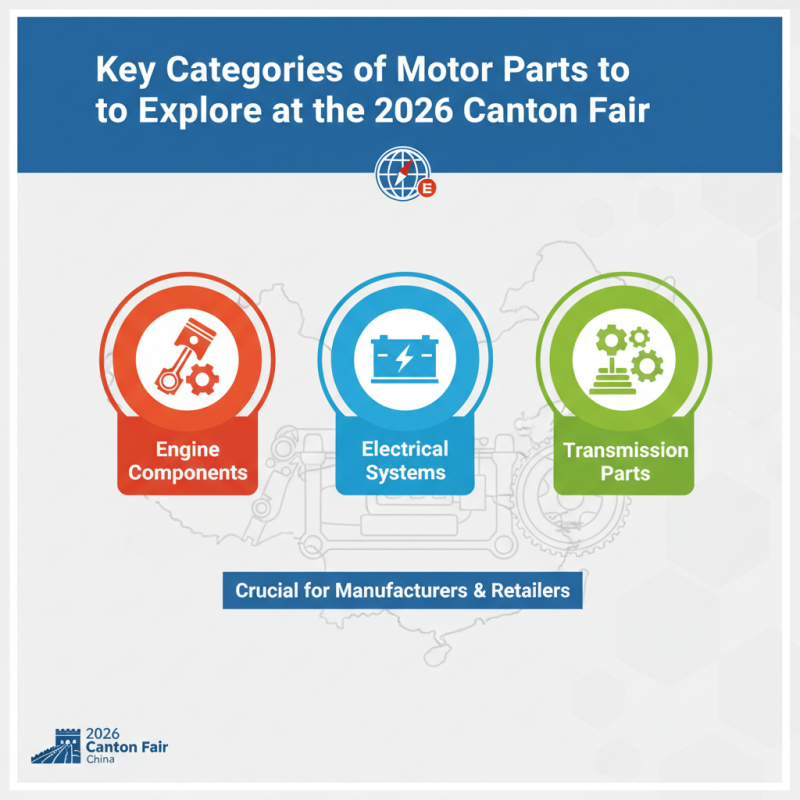
The 2026 Canton Fair in China is an excellent opportunity for sourcing motor parts. Attendees should focus on specific categories that are essential for the automotive industry. Key areas to explore include engine components, electrical systems, and transmission parts. These categories are crucial for both manufacturers and retailers.
Engine components like pistons and valves will be displayed in various styles and sizes. You can find options suitable for different vehicle models. Electrical systems, including wiring harnesses and battery connectors, will also be prominent. Quality and durability are key factors when choosing these parts.
Transmission parts can vary greatly in design and functionality. Exploring these options can lead to valuable partnerships. However, not all suppliers may meet quality standards. It’s important to verify certifications and product reliability. Taking time to assess these categories can lead to better sourcing decisions.
Innovative Technologies in Motor Parts at the 2026 Canton Fair
The 2026 Canton Fair in China promises to showcase groundbreaking innovations in motor parts. As electric vehicles rise in popularity, manufacturers are focusing on lightweight materials for better efficiency. Recent studies indicate that using composite materials can reduce weight by up to 20%, enhancing performance. Additionally, advanced manufacturing technologies like 3D printing are revolutionizing the motor parts industry, offering faster production times and customization options.
Tips: Consider exploring suppliers who utilize these innovative technologies. This could lead to unique sourcing opportunities that meet market demands.
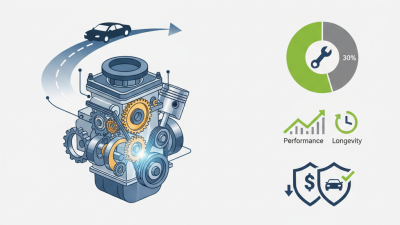
Sensors and IoT integrations are crucial in motor components. Reports highlight that smart sensors can increase efficiency by 30%. They collect real-time data to improve performance. However, reliance on technology can pose risks. Data security and integration challenges must be addressed.
Tips: Always assess the reliability of the technology you source. Prioritize suppliers who provide robust support and security measures.
High-Demand Motor Components for Global Markets in 2026
As international markets continue to rebound, the demand for high-quality motor components is on the rise. In 2026, the Canton Fair in China will showcase critical motor parts crucial for various industries. Reports indicate a projected growth rate of around 5.6% in the global automotive parts market. This growth presents opportunities for sourcing components that meet stringent quality standards.
Electric vehicle (EV) parts are particularly noteworthy. A study by Market Research Future suggests that the demand for EV motor components is expected to surge, potentially reaching $15 billion by 2026. Battery management systems and electric drive systems will be in high demand. Components like motors and inverters are essential for energy efficiency. However, suppliers must ensure reliability and performance.
Hydraulic pumps and control systems remain staples in industrial applications, driven by a projected 7% CAGR through 2026. However, quality issues can hinder performance. Buyers should focus on sourcing parts that meet specific operational requirements. Balancing cost and quality poses a challenge. Ensuring compatibility with existing systems is critical. Meeting these requirements is necessary for successful sourcing at the Canton Fair.
Top Motor Parts to Source at 2026 Canton Fair in China
Sourcing Strategies for Motor Parts Manufacturers at the Canton Fair
Sourcing motor parts at the 2026 Canton Fair can be a rewarding experience.
Manufacturers should focus on building strong relationships with suppliers. Face-to-face interactions often lead to better negotiations.
Consider visiting stalls early in the day for more attentive service. Take time to discuss technical details.
This can reveal important product specifications.
Prepare a list of parts you need. Narrow down your selection beforehand.
This ensures you don't get overwhelmed by the variety available. Use a notebook or mobile app to jot down important notes.
Some suppliers may not provide complete information at first. Be ready to ask questions.
It's essential to assess product quality. Request samples when possible. Look for inconsistencies in workmanship.
Be cautious of prices that seem too good to be true. Quality often comes at a price.
Finding the right balance between cost and quality is crucial.
Reflect on your sourcing strategy and adjust as needed throughout the fair.
Trends Influencing Motor Parts Industry at the Upcoming Canton Fair
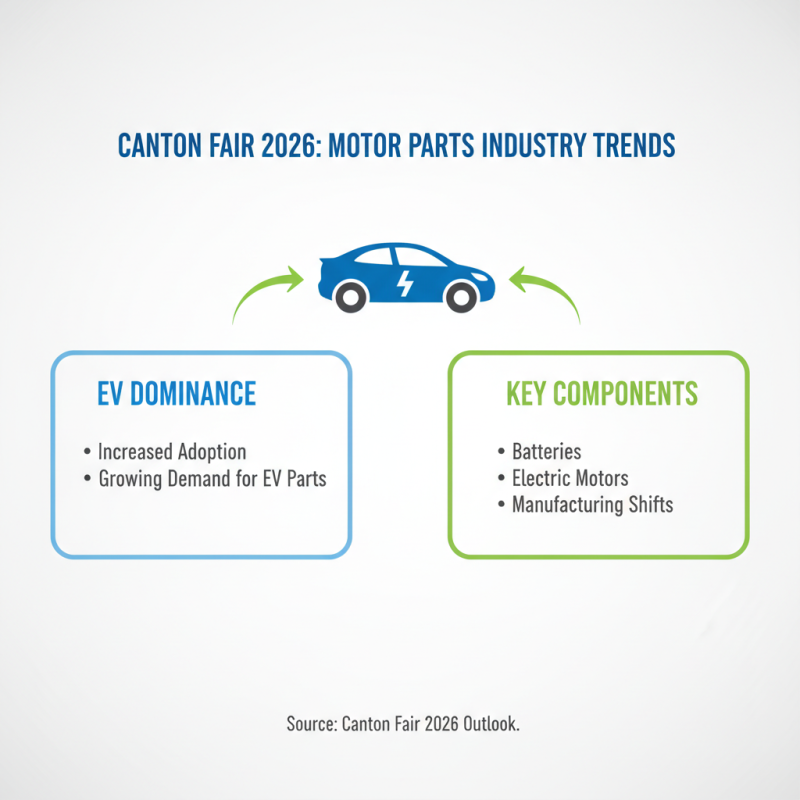
The upcoming Canton Fair in 2026 presents exciting trends in the motor parts industry. Electric vehicles (EVs) continue to dominate discussions. With more people opting for EVs, the demand for specific motor parts is increasing. Components like batteries and electric motors are hot commodities. They've changed how manufacturers approach production.
Sustainability has taken center stage, too. Shoppers look for eco-friendly motor parts. Recycling and waste reduction are more than just trends; they are essential. Many manufacturers are exploring biodegradable materials for components. However, achieving this without sacrificing quality remains a challenge.
Innovation drives the industry forward. Smart technology is now commonplace in motor parts. Systems that monitor performance in real-time are in high demand. Yet, integrating these systems into traditional models proves difficult for some. This transition requires careful planning and adaptation. As technology evolves, so does the need for skilled workers to install these advanced systems. The future holds great promise, but challenges lie ahead.