What Are the Top 10 Car Parts Suppliers Worldwide?

Choosing the world’s top ten car parts suppliers requires more than comparing revenue or factory size. A reliable ranking should examine product quality, global distribution, engineering capability, and customer support. It should also consider whether a supplier serves original equipment manufacturers, repair shops, fleet operators, or everyday drivers.

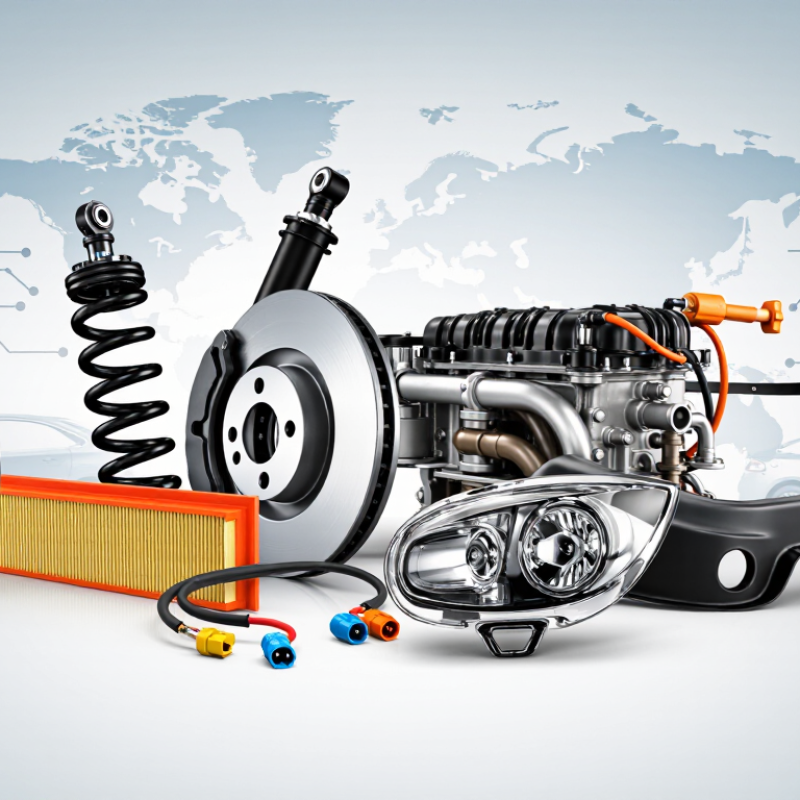
Quality leaves physical evidence. A well-made brake rotor should resist uneven wear after repeated heating. A dependable filter should fit tightly, without a crushed seal or loose edge. Strong suppliers usually support these details through laboratory testing, production audits, traceable materials, and clear warranty policies. Their catalogs may include braking systems, suspension components, electrical modules, engines, lighting, and body parts. Some companies lead in advanced electronics, while others remain stronger in conventional mechanical parts.

The phrase car parts car parts may sound repetitive, but it reflects a crowded search market and a broad industry. Ranking suppliers is not perfectly simple. Market data can change, regional availability differs, and a respected brand may perform unevenly across product categories. That limitation matters. This guide therefore focuses on practical evidence, including manufacturing experience, certification, distribution reach, innovation, and reported reliability. It does not treat advertising claims as proof. Readers should still verify part numbers, vehicle compatibility, installation guidance, and local warranty terms before buying. Small details matter. A famous supplier is not automatically the best choice for every vehicle, climate, or budget.
What Are the Top 10 Car Parts Suppliers Worldwide?

Defining the Global Car Parts Supplier Industry

Defining the Global Car Parts Supplier Industry

The global car parts supplier industry supports vehicle production, repair, and long-term maintenance. It includes original-equipment suppliers, replacement-part manufacturers, electronics specialists, and logistics partners. The boundary is not perfectly clean. Some companies serve factories and repair networks simultaneously.

Scale explains the industry’s importance. OICA recorded 93.5 million motor vehicles produced worldwide in 2023. That volume creates demand for braking systems, sensors, powertrain components, interiors, and software-enabled electronics. McKinsey estimates that the global automotive aftermarket could approach 1.2 trillion US dollars by 2030. This figure includes parts, servicing, and related distribution activity. Different reports use different definitions, so comparisons require care.

Age matters too. S&P Global Mobility reported an average US light-vehicle age of about 12.6 years in 2024. Older vehicles need more suspension, filtration, lighting, and thermal-management components. A credible global supplier therefore needs more than low prices. It must demonstrate traceability, testing discipline, stable capacity, and responsible material sourcing.

Regional warehouses also matter when a repair shop needs a component within 24 hours. Yet ranking the top ten suppliers remains imperfect. Revenue can hide weak delivery performance, while innovation may not appear immediately in annual sales. A stronger industry definition combines production reach, aftermarket coverage, quality records, digital capability, and resilience across supply disruptions.

Criteria for Ranking the Top Worldwide Suppliers

What Are the Top 10 Car Parts Suppliers Worldwide?

A credible ranking should begin with measurable scale, not visibility or advertising. Production capacity matters because OICA reported 93.5 million motor vehicles built worldwide in 2023. Suppliers serving multiple regions therefore deserve higher scores, especially when they maintain nearby warehouses and stable delivery routes. Revenue is useful, but it can mislead. A large figure may hide weak aftermarket coverage or excessive dependence on one vehicle program.

Quality and engineering should carry equal weight. Ranking teams can review defect rates, warranty claims, ISO 9001 certification, and product traceability. The supplier’s testing facilities also matter. Can its brake, suspension, or electrical components survive heat, vibration, and repeated road shock? S&P Global Mobility reported that the average age of vehicles in the United States reached 12.6 years in 2024. That finding supports reliable replacement-part coverage, not only original-equipment contracts. Still, a global warehouse network cannot compensate for inconsistent product data. That detail is often overlooked.

Resilience deserves a separate score. Deloitte’s 2024 automotive supplier research highlights continuing cost, technology, and supply-chain pressure across the sector. Strong candidates should show dual sourcing, transparent recall procedures, cybersecurity controls, and documented environmental targets. Delivery performance should be measured through fill rate and on-time shipment data. The ranking may also assess research spending, patent activity, and technician support. No method is perfect. A supplier can perform well financially while offering poor communication during a disruption. Real customer audits, independent testing, and multi-year performance records should therefore outweigh polished presentations.

Profiles of the Ten Leading Car Parts Suppliers

Global scale begins with production volume, technology depth, and delivery reliability. OICA reported 93.5 million motor vehicles produced worldwide in 2023. That volume explains why the leading ten are usually diversified. A 2024 global supplier ranking also weighs original-equipment sales and regional reach. This article profiles the group by capability, rather than repeating corporate names. It is not perfect.

The first profile is the powertrain integrator, supplying engines, transmissions, and thermal controls. The second focuses on braking and steering safety systems. The third builds electronic control units and vehicle networks. The fourth supplies sensors, cameras, and driver-assistance hardware. The fifth specializes in seating, interiors, and lightweight structures. Their common strength is disciplined validation under harsh heat, vibration, and moisture. Supplier audits matter more than polished presentations.

The sixth profile leads battery cells, modules, or high-voltage systems. The IEA’s Global EV Outlook 2024 recorded almost 14 million electric-car sales in 2023, making this capability strategically important. The seventh develops charging and energy-management components. The eighth produces lighting, displays, and connected-cabin electronics. The ninth provides rubber, metal, and engineered-plastic components at massive volume. The tenth acts as a manufacturing specialist, offering rapid tooling and regional plants. Yet resilience remains uneven; one delayed semiconductor can still stop an assembly line. These profiles need regular review because software, battery chemistry, and sourcing risks change quickly.

Key Products, Markets, and Competitive Strengths

What Are the Top 10 Car Parts Suppliers Worldwide?

Worldwide, the top ten car parts supplier groups are judged by product depth, market reach, and verified reliability. They commonly specialize in powertrain systems, braking hardware, steering modules, suspension parts, thermal management, electrical components, sensors, interiors, lighting, and replacement filters. These products support passenger cars, commercial vehicles, and electric platforms. Their markets span North America, Europe, Asia, the Middle East, and Latin America. Scale matters, but it does not guarantee consistent quality.

Competitive strength often comes from engineering validation, automated production, and disciplined quality control. Reliable suppliers publish test data, maintain traceable batches, and meet recognized automotive quality standards. Some operate regional warehouses, reducing delivery delays for repair shops. Others invest in lightweight materials, battery cooling, software-linked sensors, or recyclable components. In practice, a dependable supplier can provide a correctly labeled brake pad within days, not weeks. However, rankings can be imperfect. Revenue figures may hide recall history, regional gaps, or dependence on a few vehicle makers. That deserves scrutiny.

Tips: Compare warranty terms, certification records, stock locations, and technical support before choosing a supplier. Request samples when specifications are unclear. Check fitment data against the vehicle identification number. Track return rates over several months, because one successful shipment proves little. Price alone is a weak measure. A cheaper component may increase labor costs or downtime. For purchasing teams, verified performance and stable supply often matter more than the lowest quotation.

What Are the Top 10 Car Parts Suppliers Worldwide? - Key Products, Markets, and Competitive Strengths

Anonymized comparison of leading global automotive supplier profiles by scale, product breadth, geographic reach, and technology capabilities.

Rank Supplier Profile Primary Product Categories Estimated Annual Automotive Revenue Scale Main Markets and Customer Coverage Manufacturing Footprint Key Competitive Strengths Strategic Position
1 Supplier Profile A Powertrain systems, thermal management, filtration, aftermarket components More than US$40 billion North America, Europe, Asia-Pacific, and major emerging markets; broad OEM and replacement-market coverage Operations across more than 30 countries with extensive regional production and distribution Very broad portfolio, high-volume manufacturing, strong aftermarket logistics, and deep OEM relationships Diversified global systems supplier with significant exposure to both conventional and electrified vehicles
2 Supplier Profile B Tires, vehicle electronics, advanced driver-assistance systems, chassis components US$35–45 billion Strong presence in Europe, North America, China, India, and Southeast Asia More than 20 countries, supported by regional engineering centers and testing facilities Advanced sensing, safety engineering, software integration, and premium original-equipment programs Technology-led supplier positioned at the intersection of safety, connectivity, and automated driving
3 Supplier Profile C Seating, interiors, electronic systems, body structures, battery-related components US$30–40 billion Global OEM programs across North America, Europe, Asia-Pacific, and Latin America Large multinational network of assembly plants, engineering centers, and supplier facilities Integrated vehicle-module design, lightweighting expertise, and strong program-management capability High-content interior and complete-system partner for global vehicle platforms
4 Supplier Profile D Driveline systems, chassis technology, steering, braking, and vehicle dynamics US$25–35 billion Europe, North America, China, Japan, South Korea, and other industrial vehicle markets Global production base with strong European engineering and Asian manufacturing capacity Precision engineering, vehicle-dynamics integration, and scalable electrified-driveline solutions Core chassis and driveline specialist supporting passenger cars, commercial vehicles, and electric platforms
5 Supplier Profile E Electrical distribution, wiring systems, sensors, control units, and cabin electronics US$20–30 billion Strong OEM penetration in Europe, Asia-Pacific, North America, and selected emerging markets Highly distributed manufacturing model designed to support just-in-time vehicle assembly Complex wiring expertise, low-voltage and high-voltage architectures, and strong systems integration Essential electrical backbone supplier benefiting from vehicle electrification and software-defined architectures
6 Supplier Profile F Power electronics, sensors, fuel-injection systems, thermal systems, and aftermarket parts US$20–30 billion Europe, China, India, North America, South America, and commercial-vehicle markets More than 25 countries with regional research, manufacturing, and service operations Strong research base, broad sensor portfolio, and balanced exposure to combustion and electric vehicles Transition-focused supplier serving both current powertrains and next-generation electrified mobility
7 Supplier Profile G Lighting, electronics, body controls, connectivity modules, and driver-assistance components US$15–25 billion Europe, North America, China, Japan, South Korea, and premium vehicle segments International network concentrated around major vehicle-production and technology centers Optical engineering, intelligent lighting, compact electronics, and strong design-in capability Specialist in visible vehicle technology, digital lighting, and integrated electronic functions
8 Supplier Profile H Automotive glass, glazing systems, acoustic solutions, and lightweight composite components US$10–20 billion Europe, North America, China, Southeast Asia, and global replacement markets Regional plants located near vehicle assembly operations and glass-replacement distribution hubs Advanced glazing, weight reduction, acoustic comfort, and strong aftermarket availability Specialized materials supplier supporting visibility, comfort, safety, and vehicle lightweighting
9 Supplier Profile I Seats, interior trim, instrument panels, roof systems, and vehicle comfort modules US$10–20 billion Europe, North America, China, India, and Latin America Local-for-local production model with plants close to vehicle assembly lines Interior innovation, modular design, comfort engineering, and efficient sequenced delivery Interior-focused supplier with strong capabilities in comfort, aesthetics, and space optimization
10 Supplier Profile J Bearings, seals, belts, pumps, thermal components, and industrial aftermarket parts US$8–15 billion Europe, North America, China, India, Japan, and global repair markets Global manufacturing and distribution network with extensive independent aftermarket reach Precision components, reliability, long product life, and broad vehicle-park coverage Specialist component and aftermarket supplier with resilient demand across vehicle generations

Data note: Revenue figures are indicative 2024 automotive-business ranges compiled from publicly reported company disclosures, annual reports, and industry rankings. Profiles are anonymized, and rankings reflect approximate global automotive scale rather than a single standardized accounting definition.

Trends Shaping the Future of Global Automotive Supply

What Are the Top 10 Car Parts Suppliers Worldwide?

Trends Shaping the Future of Global Automotive Supply

The leading automotive suppliers are changing with the vehicle itself. Electric cars, connected systems, and automated driving need different parts and skills. The IEA’s Global EV Outlook 2025 reported more than 17 million electric cars sold in 2024. That exceeded one-fifth of global new-car sales. Battery demand also passed 1 TWh. This shift is reshaping supplier rankings.

Cost still matters, but it no longer tells the full story. Procurement teams now examine software capability, battery safety, cybersecurity, and regional production. Deloitte’s 2024 automotive supplier research identified electrification and digital technologies as major investment priorities. A strong supplier should provide traceable materials, stable quality records, and realistic delivery data. Not every supplier is ready. Some still measure success through volume alone.

Tips: Ask suppliers for plant-level evidence, not polished presentations. Check warranty trends, audit results, and recovery plans for disruptions. Compare carbon data using consistent boundaries. The International Energy Agency also warns that battery minerals remain geographically concentrated, creating supply risks. Dual sourcing can reduce exposure, although it raises short-term costs. That trade-off is uncomfortable. It may still protect production when ports close, energy prices rise, or a key component fails. Supplier evaluations should be reviewed quarterly, because yesterday’s top ten may not fit tomorrow’s vehicle architecture.