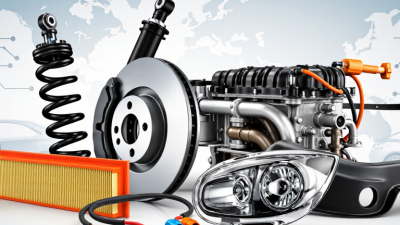
China’s automotive parts industry has grown far beyond low-cost manufacturing. It now combines large-scale production, advanced electronics, battery technology, and increasingly strict quality systems. Suppliers serve domestic brands, global automakers, and aftermarket buyers. Their factories may produce battery cells, braking systems, glass, interiors, sensors, or precision engine components.
As Bill Russo, founder of Automobility Limited, has observed, “China is no longer just the world’s factory; it is becoming the world’s innovation lab.” That shift matters when evaluating the top automotive parts suppliers in China. Scale alone does not prove reliability. A supplier may offer an attractive quotation, yet struggle with traceability, engineering communication, or consistent delivery. That weakness can become visible beside a shipment of mismatched connectors or poorly labeled cartons.
This guide examines leading companies such as CATL, Fuyao Glass, Minth Group, Joyson Electronics, Weichai Power, and other important manufacturers. It considers product range, production capacity, research investment, export experience, certifications, and relationships with original equipment manufacturers. The list is not perfectly universal. Rankings change with market demand, technology cycles, and customer requirements. A battery producer may lead one category, while a braking or interior supplier dominates another.
Practical judgment remains essential. Company websites can present polished claims. Independent audits, factory visits, sample testing, and customer references provide stronger evidence. Readers should also check warranty terms, intellectual-property controls, environmental practices, and after-sales support. The strongest supplier is not always the largest. Sometimes, a responsive specialist creates fewer risks.
What Are the Top Automotive Parts Suppliers in China?
China’s automotive parts industry is broad, layered, and strongly connected to vehicle production. The China Association of Automobile Manufacturers reported 31.28 million vehicles produced in 2024. Sales reached 31.44 million units. New-energy vehicles represented about 40% of total sales.
This scale supports thousands of suppliers across electronics, braking systems, thermal management, interiors, castings, and battery components. Major production clusters sit around the Yangtze River Delta, the Pearl River Delta, and northeastern China. These regions offer dense logistics networks and nearby assembly plants. Supplier evaluation now depends on more than price. Engineers usually examine testing records, process control, delivery stability, and traceability.
The International Energy Agency’s Global EV Outlook 2024 identified China as the world’s largest electric-car market. That growth is reshaping demand for inverters, charging hardware, power semiconductors, and lightweight structures. Smaller suppliers can move quickly, but their documentation may be less consistent. This remains a practical concern. Buyers should verify factory capacity through audits, sample testing, and production data rather than relying only on online profiles. CAAM figures measure vehicle output, not every parts transaction, so industry comparisons are not perfectly equivalent.
Ranking leading automotive parts suppliers in China requires more than checking revenue. A credible model should measure quality, delivery, engineering depth, and financial resilience. CAAM reported 31.28 million vehicles produced and 31.44 million sold in China during 2024. This scale raises the value of stable capacity and traceable production.
Quality should carry the greatest weight. Review IATF 16949 certification, warranty claims, audit findings, recall history, and process capability data. Ask for defect rates by million parts, not broad promises. Delivery performance also matters. Compare on-time delivery, average lead times, buffer-stock policy, and recovery plans for tooling or material disruptions. Real factory visits often reveal more than polished presentations.
Innovation needs measurable proof. Examine patent activity, test-laboratory capability, software controls, lightweight materials, and investment in electrified systems. The China National Bureau of Statistics reported national research and development spending of 3.61 trillion yuan in 2024, showing a highly competitive innovation environment. However, patent counts can mislead. A supplier may own many patents but lack durable production experience. My ranking would assign evidence-based scores, perhaps 30% quality, 20% delivery, 20% engineering, 15% cost transparency, and 15% compliance and financial health. The weighting is imperfect. Different vehicle programs need different priorities. A safety-critical component should never be ranked like a low-risk interior trim part.
| Rank | Evaluation Dimension | Weight | Assessment Criteria | Verified Data or Benchmark | Maximum Score |
|---|---|---|---|---|---|
| Core Ranking Framework | |||||
| 1 | Quality Management | 20% | Strength and maturity of automotive quality systems, corrective-action processes, and product validation. | IATF 16949 certification is the primary automotive quality benchmark. Additional evidence includes PPAP capability, APQP implementation, process audits, and measurable defect reduction. | 20 |
| 2 | Manufacturing Capability | 15% | Production capacity, automation level, process control, tooling capability, and ability to support high-volume programs. | Assessment should cover available production lines, equipment utilization, preventive maintenance, process capability studies, and documented capacity-reservation procedures. | 15 |
| 3 | Engineering and R&D | 15% | Ability to design, test, validate, and improve components rather than only manufacture to supplied drawings. | Relevant evidence includes in-house product engineering, material laboratories, dimensional inspection, durability testing, simulation, prototyping, and design-change control. | 15 |
| 4 | Delivery Reliability | 12% | Consistency of on-time delivery, lead-time control, production planning, and response to demand fluctuations. | Use a documented rolling 12-month on-time-in-full rate, production lead time, safety-stock policy, supplier schedule adherence, and escalation response time. | 12 |
| 5 | Global Compliance and Export Readiness | 10% | Ability to meet destination-market requirements and manage international documentation, customs, packaging, and product conformity. | Review export documentation, product declarations, restricted-substance controls, country-specific regulatory knowledge, multilingual technical files, and customer audit history. | 10 |
| 6 | Cost Competitiveness | 10% | Total landed cost, cost transparency, productivity, material efficiency, and long-term cost-reduction capability. | Compare quotation structure, tooling amortization, logistics, warranty exposure, material yield, labor productivity, and annual value-engineering proposals. | 10 |
| 7 | Supply-Chain Resilience | 8% | Ability to withstand raw-material shortages, logistics disruption, energy interruptions, and single-source dependency. | Evaluate approved alternate suppliers, business-continuity plans, dual sourcing, critical-material coverage, disaster recovery, and financial-risk monitoring. | 8 |
| 8 | New-Energy Vehicle Readiness | 5% | Capability to support battery-electric, hybrid, and electronically controlled vehicle platforms. | Relevant indicators include high-voltage safety controls, thermal-management expertise, lightweight materials, electronic control capability, battery-related component experience, and electrical testing. | 5 |
| 9 | Environmental and Social Management | 3% | Control of emissions, energy, waste, labor practices, responsible sourcing, and environmental risk. | Consider ISO 14001 certification, energy and greenhouse-gas monitoring, hazardous-waste controls, supplier codes of conduct, occupational safety records, and audit closure performance. | 3 |
| 10 | Aftermarket and Service Support | 2% | Availability of replacement parts, warranty handling, technical support, packaging quality, and customer communication. | Measure warranty response time, return authorization process, spare-parts availability, technical documentation, serial-number traceability, and complaint closure time. | 2 |
| Recommended Scoring Interpretation | |||||
| A | Preferred Strategic Supplier | 90–100 | Suitable for long-term, high-volume, or safety-critical programs. | Demonstrates strong quality systems, verified capacity, reliable delivery, robust engineering, and effective business-continuity controls. | 100 |
| B | Qualified Development Supplier | 75–89 | Suitable for approved sourcing with targeted improvement actions. | Meets core technical and quality requirements but may require improvement in scale, international support, resilience, or advanced testing. | 89 |
| C | Conditional Supplier | 60–74 | Suitable for limited, non-critical, or pilot-stage business. | Shows commercial potential but requires documented corrective actions before receiving strategic or safety-critical work. | 74 |
| D | High-Risk Supplier | Below 60 | Not recommended for strategic sourcing without substantial qualification work. | Material gaps may exist in certification, traceability, capacity, compliance, delivery reliability, or continuity planning. | 59 |
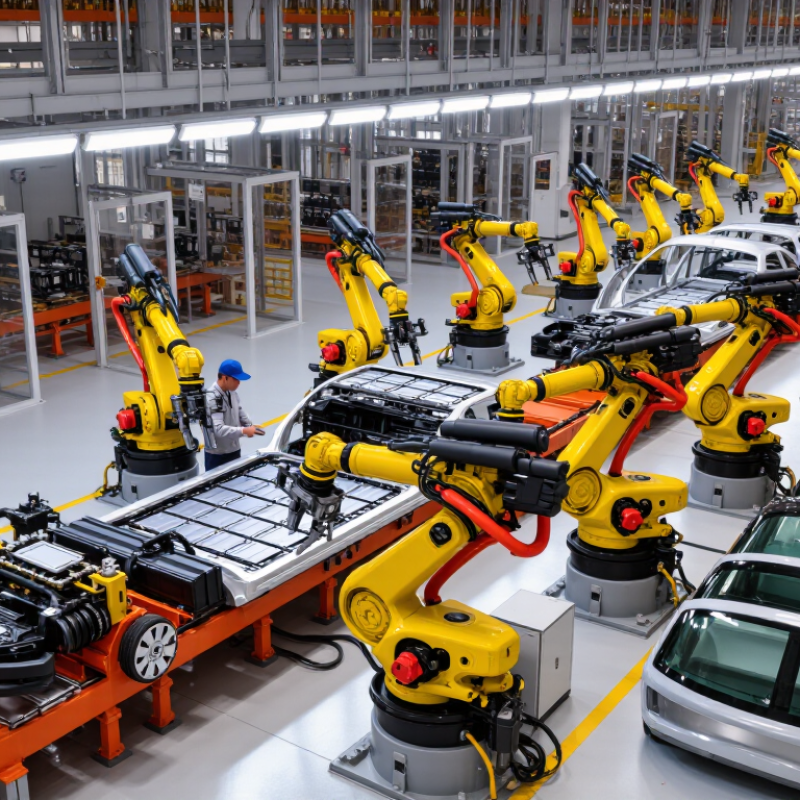
China’s leading automotive parts manufacturers cover precision machining, stamped metal, plastic molding, casting, and electronic assemblies. Their strength often comes from integrated production. A capable supplier may design tooling, run automated inspection, and complete final assembly under one roof.
In supplier audits, plant discipline matters as much as equipment. Look for stable production lines, calibrated gauges, and clear material records. Quality shows early. Strong manufacturers provide dimensional reports, process-control data, and batch traceability. They also test components through vibration, temperature changes, corrosion exposure, or repeated load cycles. These details help buyers judge reliability beyond a polished factory tour.
The best profiles should also explain engineering depth. Experienced teams can adjust tolerances, improve mold flow, and reduce unnecessary material use. They communicate changes before production, not after defects appear. Export readiness is another useful measure. Check packaging design, labeling accuracy, inspection records, and response times for technical questions. Documentation matters.
However, size can create blind spots. A large facility may still struggle with small production runs or custom revisions. Smaller specialists may offer faster engineering support but lack backup capacity. Buyers should compare samples, audit findings, lead-time history, and corrective-action records. One overlooked detail can affect an entire vehicle program. Supplier selection needs evidence, not impressive claims.
China’s automotive parts suppliers now cover far more than stamped metal and replacement components. Their key categories include powertrain systems, braking modules, steering assemblies, thermal management, vehicle lighting, interiors, sensors, and electronic control units. The China Association of Automobile Manufacturers reported 31.28 million vehicles produced in 2024, including 12.89 million new-energy vehicles. That production scale supports deep specialization and faster component development.
Electric vehicles have shifted supplier priorities. High-voltage battery packs, battery-management systems, electric drive units, inverters, and charging components receive major investment. The International Energy Agency reported that China accounted for more than half of global electric-car sales in 2024. Suppliers are therefore improving cell cooling, silicon-carbide power electronics, lightweight housings, and software diagnostics. Thermal control is practical, not decorative; a poorly managed battery can lose range in winter or under heavy loads.
The technology mix also includes millimeter-wave radar, camera modules, ultrasonic sensing, wiring harnesses, and domain controllers. Many factories now combine automated optical inspection with digital production tracking. However, supplier claims require careful verification. Laboratory performance may not equal long-term road durability. The weak point is often integration. Buyers should check material traceability, functional-safety processes, cybersecurity controls, and independent validation records. S&P Global Mobility reports continuing pressure on suppliers to localize software and electronics, but smaller manufacturers may lack mature testing teams. That gap deserves more attention.
Selecting a suitable Chinese automotive parts supplier requires more than comparing online quotations. Reliable suppliers usually show stable production, clear quality controls, and experience with similar components. Ask for factory registration details, production capacity, inspection procedures, and export records. A polished showroom is not enough.
Request product samples before signing a large order. Check dimensions, material consistency, surface finish, packaging, and test reports. For safety-related parts, confirm traceability and documented testing. An independent factory audit can examine calibration records, worker training, warehouse conditions, and final inspection areas. No audit is perfect.
Communication also matters. A capable supplier should explain tolerances, tooling costs, minimum order quantities, and delivery risks in plain language. Compare the full cost, including molds, packaging, freight, duties, and possible rework. The lowest quotation may hide weak materials or unstable production. That mistake is expensive.
Use a written quality agreement with measurable acceptance standards. Include sample approval, inspection timing, defect handling, and corrective-action deadlines. Check whether the supplier can support future design changes without disrupting production. Some suppliers answer quickly before receiving an order, then respond slowly afterward. This deserves attention.
Do not rely on certificates alone. Verify their scope, validity, and connection to the actual production site. A trial order can reveal more than a long presentation, although it still cannot predict every problem. Careful buyers keep records, ask uncomfortable questions, and reassess suppliers when performance changes.