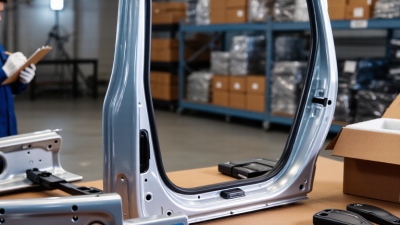
Why Choose Quality Auto Body Parts for Global Sourcing?
Global sourcing can make auto body parts more accessible, but price alone should never lead the decision. A low-cost fender may arrive with uneven edges, weak corrosion protection, or mounting holes that do not align. That small defect can create paint delays, extra labor, and customer dissatisfaction. Quality parts reduce these hidden costs. They also support safer repairs and more consistent workshop performance.
W. Edwards Deming, a respected quality-management expert whose principles influenced automotive manufacturing, said, “Quality comes not from inspection, but from the improvement of the production process.” His words remain relevant to international auto body parts sourcing. Reliable suppliers build quality into material selection, stamping, welding, coating, packaging, and final inspection. Buyers should review fitment data, production records, sample parts, warranty terms, and traceability before placing large orders. A clear inspection plan matters too. Photos are not enough.
The real test is practical. Does the door skin match the original contour? Does the bumper survive careful handling? Does the finish resist moisture during ocean transport? These details reveal supplier discipline. Certifications can help, but they do not replace evidence. Some suppliers look excellent on paper. Reality may disagree. That is where procurement teams must remain curious and willing to reconsider assumptions. Global sourcing is not merely about finding cheaper auto body parts. It is about building a dependable supply chain that protects repair quality, delivery schedules, and long-term trust. Mistakes can still happen. The goal is to detect them early, learn from them, and improve the next purchase.
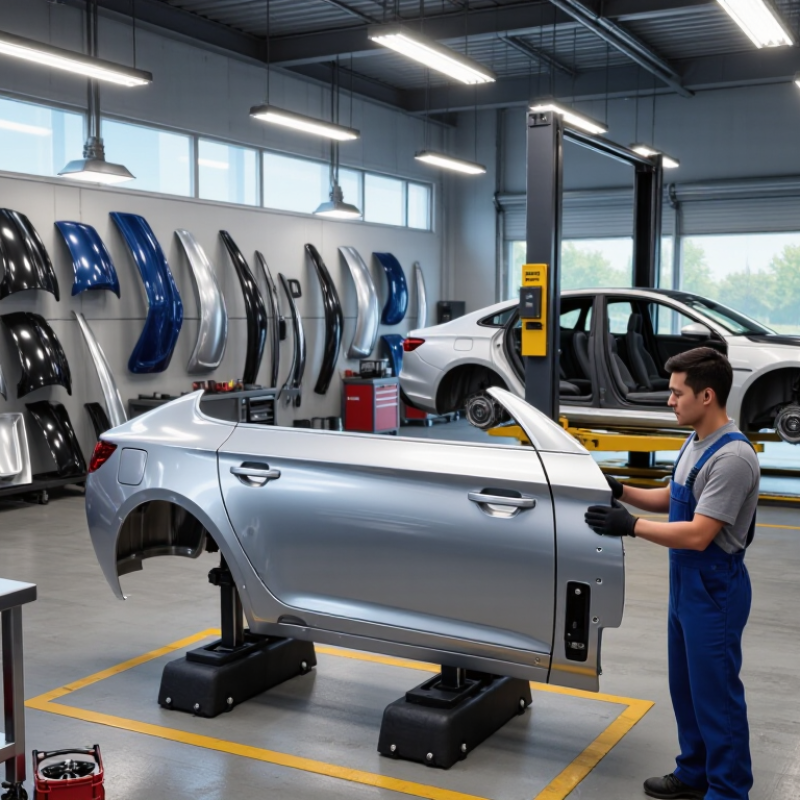
Understanding Quality Auto Body Parts in Global Sourcing
Global sourcing of auto body parts requires more than a low purchase price. Quality depends on fit, materials, manufacturing control, and dependable documentation. A well-made fender should align with nearby panels without excessive pressure or uneven gaps. That detail saves repair time.
Before placing a large order, request samples and technical specifications. Check panel thickness, surface finish, mounting points, and corrosion protection. Ask how suppliers inspect production batches. Photos help, but hands-on inspection reveals more. Small gaps matter. They can become costly delays.
MATERIALS & PROTECTION
Material choice also affects safety and service life. Panels should resist vibration, moisture, and ordinary road exposure. Structural components require stricter testing and traceable records. Packaging deserves attention too. Weak corner protection can damage good parts during international transport. Clear labels reduce warehouse mistakes.
Reliable sourcing includes communication after shipment. Keep inspection results, batch numbers, and approved samples together. This creates evidence when quality questions appear. No supplier gets every detail right, and buyers can miss problems too. That is an uncomfortable but useful reality. Experienced purchasing teams review defects openly and adjust specifications when field feedback exposes a weakness.
Key Benefits of Choosing Reliable Auto Body Parts
Reliable auto body parts reduce uncertainty during global sourcing. They support accurate fit, stable repair times, and fewer rejected shipments. That matters as vehicles remain on the road longer. S&P Global Mobility reported that the average U.S. light vehicle age reached 12.6 years in 2024. Older vehicles often need replacement panels, lamps, brackets, and reinforcement components.
Quality starts with measurable controls. Suppliers should provide material specifications, dimensional inspection records, coating results, and batch traceability. IATF 16949-based systems can strengthen process discipline, while ISO 9001 supports consistent quality management. These certificates do not guarantee perfect parts. They create a stronger audit trail. In practical sourcing, a panel should arrive with clean edges, aligned mounting holes, and protected surfaces. Small defects become expensive when labor, customs handling, and workshop delays are added.
Reliability also improves planning. The 2024 Global Automotive Supplier Study by Deloitte highlights continuing pressure on suppliers to improve resilience, cost control, and operational visibility. Buyers should examine production capacity, inspection frequency, packaging design, and replacement policies before ordering. A damaged corner inside a weak carton can erase the savings from a lower unit price. Honestly, quality checks can slow the first purchase. That is not always a weakness. It may reveal unclear drawings, inconsistent samples, or unrealistic delivery expectations before a larger shipment is released.
Why Choose Quality Auto Body Parts for Global Sourcing?
Key Benefits of Choosing Reliable Auto Body Parts
Global vehicle production is distributed across several major regions. Reliable auto body parts help buyers maintain consistent fit, safety, durability, and supply continuity across different markets, reducing rework, returns, and avoidable delays.
Data source: International Organization of Motor Vehicle Manufacturers (OICA), 2023 production statistics. Figures are rounded and shown in millions of vehicles.
How to Evaluate Auto Body Part Quality and Compatibility
Quality auto body parts require more than a clean photograph and a low quotation. Inspect the material, dimensions, surface finish, and manufacturing records. Fit comes first. Ask for drawings, batch traceability, and inspection reports before placing a larger order. Reliable suppliers should explain their testing methods clearly, not hide behind general claims.
Compatibility begins with accurate vehicle information. Confirm the model year, body style, engine variation, and production location. Check mounting holes, edge profiles, lamp openings, and sensor cutouts. A panel may look correct but still create uneven gaps around the hood or door. Measure twice. Compare the supplied part with an original sample when possible. Digital images cannot reveal every bend or tolerance issue.
Material thickness deserves close attention. Thin metal may flex during installation, while uneven coating can expose edges to early corrosion. Inspect weld points, fasteners, packaging, and protective films. Request sample approval before approving a full shipment. No checklist is perfect. A part can pass visual inspection and still need a practical fitting test. This is where evaluation often becomes less certain, especially across different production batches. Keep dated photos and measurement records for each sample. Those details support fair claims and help purchasing teams identify repeated quality changes.
Best Practices for Global Auto Body Parts Procurement
Global auto body parts procurement needs more than a low quotation.
OICA reported 93.5 million motor vehicles produced worldwide in 2023, increasing pressure on replacement and repair supply chains. Buyers should define panel gaps, steel grade, coating thickness, corrosion resistance, and packaging requirements before requesting prices. Fit comes first. A door skin that arrives scratched or misaligned creates labor costs and customer complaints.
Reliable sourcing begins with verified suppliers and repeatable inspections. Request material certificates, dimensional reports, production samples, and batch-level traceability. ISO 9001 systems help control processes, while IATF 16949-based practices offer stronger automotive quality discipline.
The World Bank’s 2023 Logistics Performance Index shows significant differences in customs, infrastructure, and delivery reliability across markets. Therefore, procurement teams should assess transit risk, port performance, buffer stock, and replacement procedures, not only unit cost. A small pilot order can expose weak packaging, inconsistent welding, or color variation before a container is shipped.
Quality data should remain visible after delivery. Record rejection rates, claims, inspection photos, and corrective-action timing in one shared dashboard. Use supplier audits and periodic sample testing, especially for bumpers, fenders, hoods, and structural-adjacent components. Dual sourcing can protect continuity, but it may introduce different tooling marks or paint shades. That risk is often underestimated. A perfect scorecard is unrealistic; experienced buyers leave room for human error, revise specifications after field feedback, and verify whether “approved” parts still fit actual repair conditions.